Sevilla: History, Stadium, Trophies, Legends and 2026-27 Guide
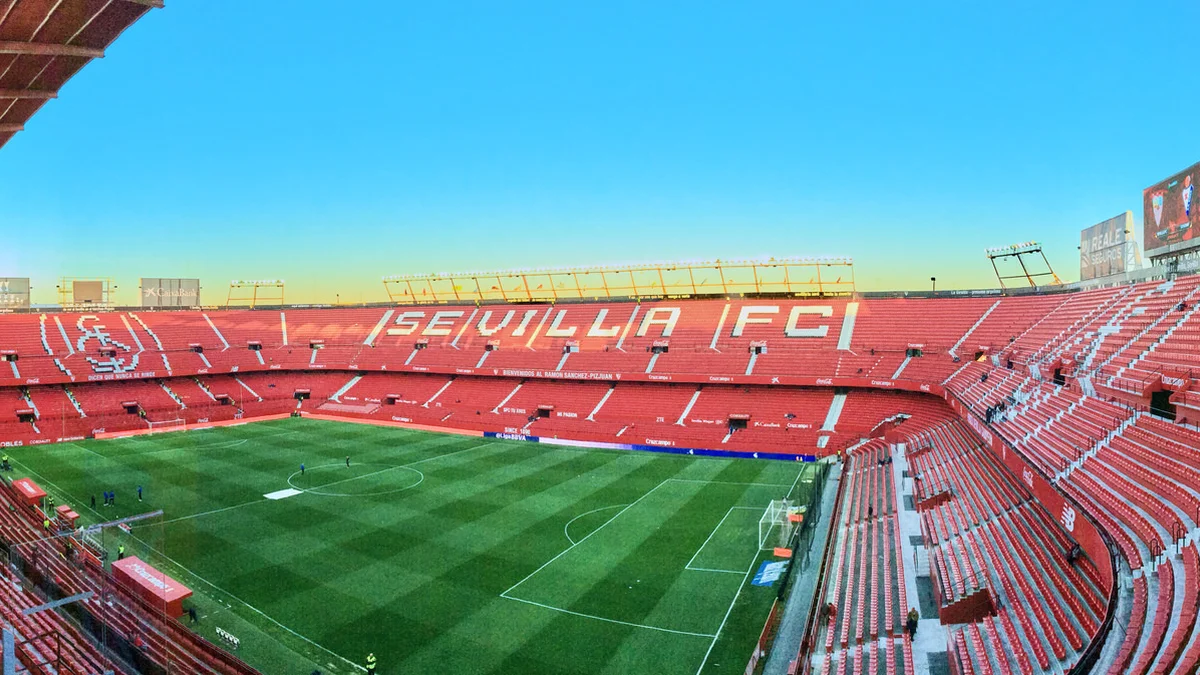
Sevilla stand alone in European football. No club in the world has mastered the Europa League like the team from Andalusia. Seven titles, seven finals, seven wins. That record, built across three decades, turned a proud Spanish club into a European institution and gave the Ramon Sanchez-Pizjuan a reputation as one of the loudest grounds on the continent.
This guide covers the full arc of Sevilla history, from the foundation in 1890 to the Europa League dynasty of the modern era. It explains the stadium, the trophy record, the legends who shaped the identity, and the state of play in the 2026-27 season.
Sevilla History: Foundation and Early Decades

Sevilla were formed on 25 January 1890 as Sevilla Foot-ball Club, which makes the club the second oldest sporting club in Spain devoted solely to football, after Recreativo de Huelva. Scottish-born Edward Farquharson Johnston served as the first president. The club grew from a group of British and Spanish sports lovers in Seville into the dominant force in Andalusian football.
The first national success arrived in the 1930s and 1940s. Sevilla won the Copa del Rey in 1935, 1939, and 1948. The greatest early triumph came in the 1945-46 season, when the club won the only LaLiga title in club history, edging Barcelona by one point. Juan Arza led the attack in that era and later won the Pichichi Trophy as the top scorer in LaLiga.
Stadium, Crisis, and Rebirth

The Ramon Sanchez-Pizjuan Stadium opened on 7 September 1958 with a friendly against Real Jaen. The stadium took the name of the president who drove the project but died before the opening. The ground hosted the 1982 World Cup semi-final between France and West Germany and the 1986 European Cup final between Steaua Bucharest and Barcelona.
The decades after the stadium opening brought hardship. The club paid heavy debts from construction, sold top players, and suffered relegations in 1968, 1973, and 1997. Diego Maradona played for Sevilla in the 1992-93 season, but the spell ended early. At the start of the 21st century, the club dropped to the second division again, then rebuilt under coach Joaquin Caparros and sporting director Monchi.
The Europa League Dynasty
The modern era began on 10 May 2006, when Sevilla beat Middlesbrough 4-0 in the UEFA Cup final in Eindhoven. Luis Fabiano opened the scoring, Enzo Maresca scored twice, and Frederic Kanoute completed the rout. The win ended a 58-year wait for a major title. Sevilla then beat Barcelona 3-0 in the UEFA Super Cup and defended the UEFA Cup in 2007 by beating Espanyol on penalties, with goalkeeper Andres Palop saving three penalties in the shootout.
Under Unai Emery, the club won three consecutive Europa League titles in 2014, 2015, and 2016, beating Benfica, Dnipro, and Liverpool in the finals. Carlos Bacca scored twice in the 2015 final, while Kevin Gameiro and captain Coke scored in the 2016 comeback against Liverpool. Sevilla added a sixth title in 2020 by beating Inter Milan 3-2, then a record seventh title in 2023 by beating Roma on penalties in Budapest. The club have never lost a Europa League final.
Ramon Sanchez-Pizjuan Stadium

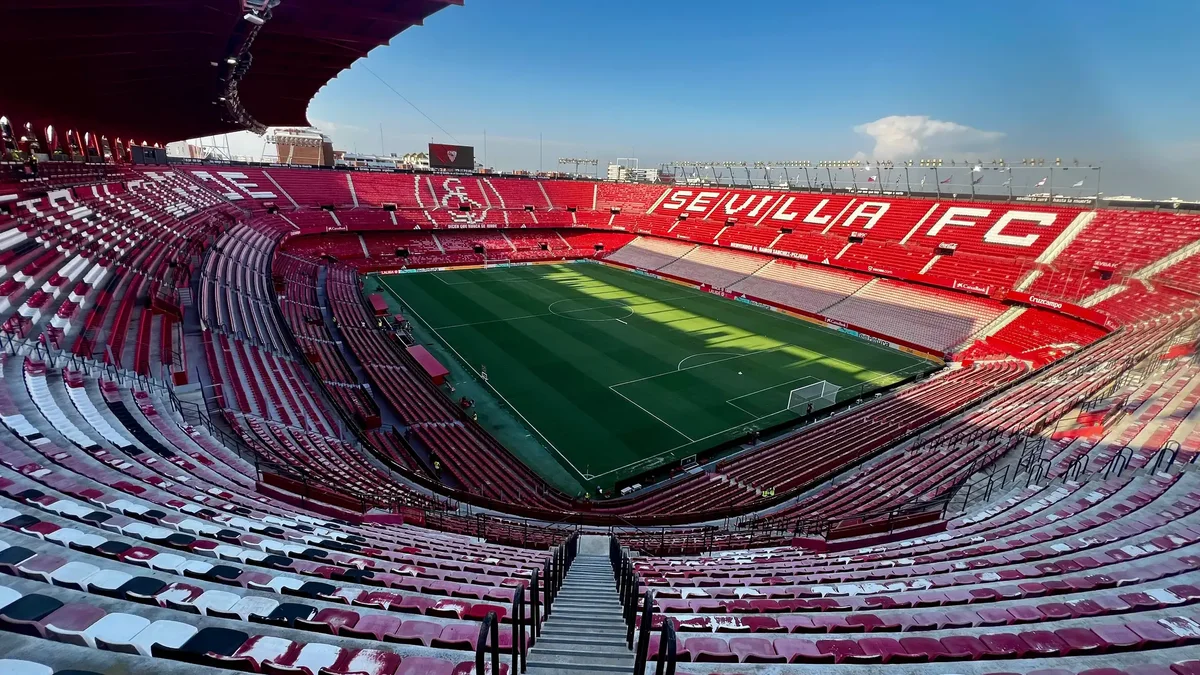
Sevilla play home matches at the Ramon Sanchez-Pizjuan Stadium in the Nervion district of Seville. The stadium holds 42,714 spectators. The ground reached a capacity of 70,000 in 1974, then changed through World Cup work and the move to all-seater stands. The official club stadium story recalls the 1982 World Cup semi-final and the 1986 European Cup final as landmark nights at the ground.
The stadium remains famous for European nights. The steep stands keep the crowd close to the pitch, and the noise on a knockout evening has unsettled many visiting teams.
Trophies and Records
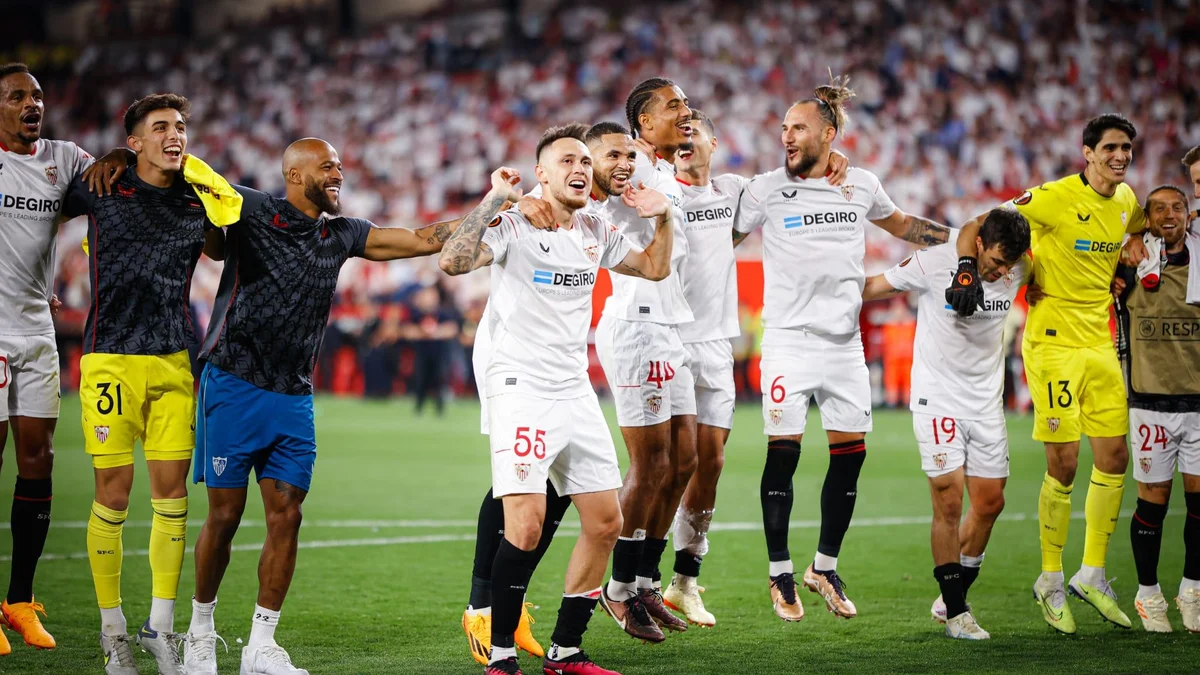
Sevilla rank as the most successful club in Andalusia and the most successful club in Europa League history. The club have won one LaLiga title, five Copa del Rey titles, and a record seven UEFA Cup and Europa League titles. The domestic and European totals below cover the major honours in club history.
| Category | Detail |
|---|---|
| Founded | 25 January 1890, as Sevilla Foot-ball Club |
| Stadium | Ramon Sanchez-Pizjuan, Seville |
| Capacity | 42,714 |
| LaLiga titles | 1, in 1945-46 |
| Copa del Rey | 5 |
| UEFA Cup / Europa League | 7, a world record |
| UEFA Super Cup | 1, in 2006 |
| Spanish Super Cup | 1, in 2007 |
| Europa League finals | 7 played, 7 won |
| Head coach, 2026-27 | Luis Garcia Plaza |
| 2025-26 LaLiga finish | 13th |
Legendary Players
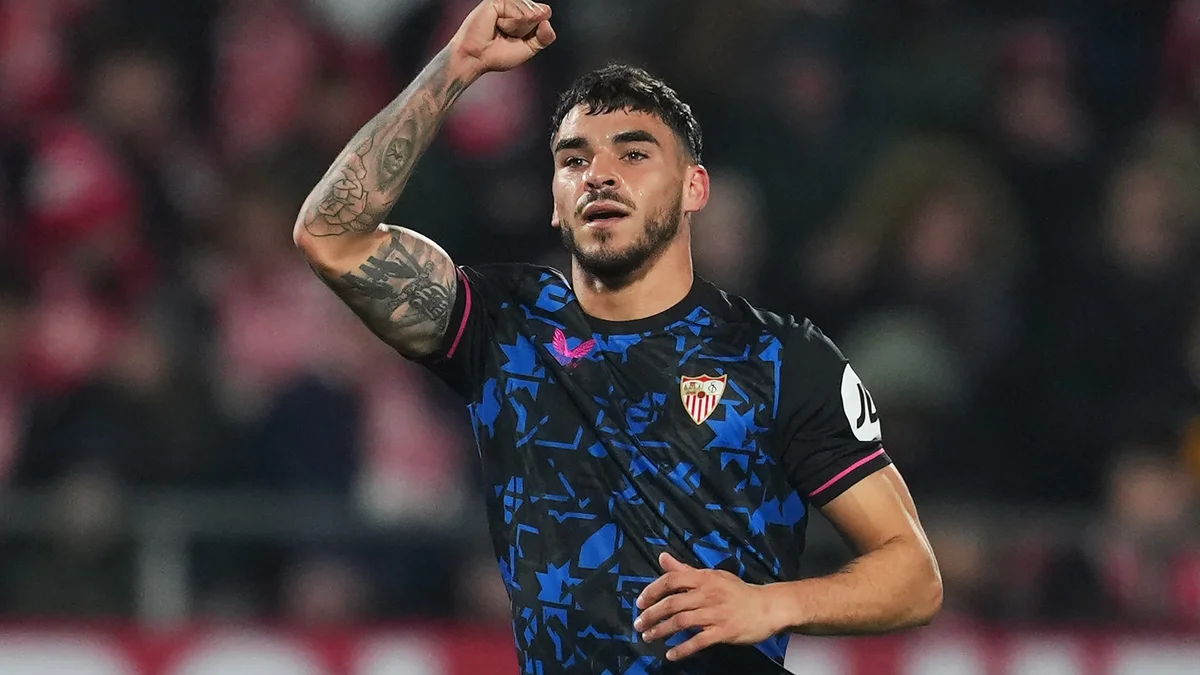
Juan Arza leads the early legends. The forward starred in the 1940s, won the Pichichi Trophy, and helped the club win the only league title. Guillermo Campanal played and later coached the club through the same era. Diego Maradona wore the shirt in 1992-93, a short spell that still draws attention from fans across the world.
The Europa League era produced new heroes. Frederic Kanoute scored in the 2006 final and in the 2007 Copa del Rey final. Andres Palop saved three penalties in the 2007 shootout. Dani Alves and Seydou Keita starred before moves to Barcelona. Jesus Navas and Ivan Rakitic led later winning teams, while Carlos Bacca and Kevin Gameiro delivered goals in the three consecutive finals under Emery. Antonio Puerta remains a beloved figure after his death in 2007, days after the first match of the season.
The 2026-27 Season
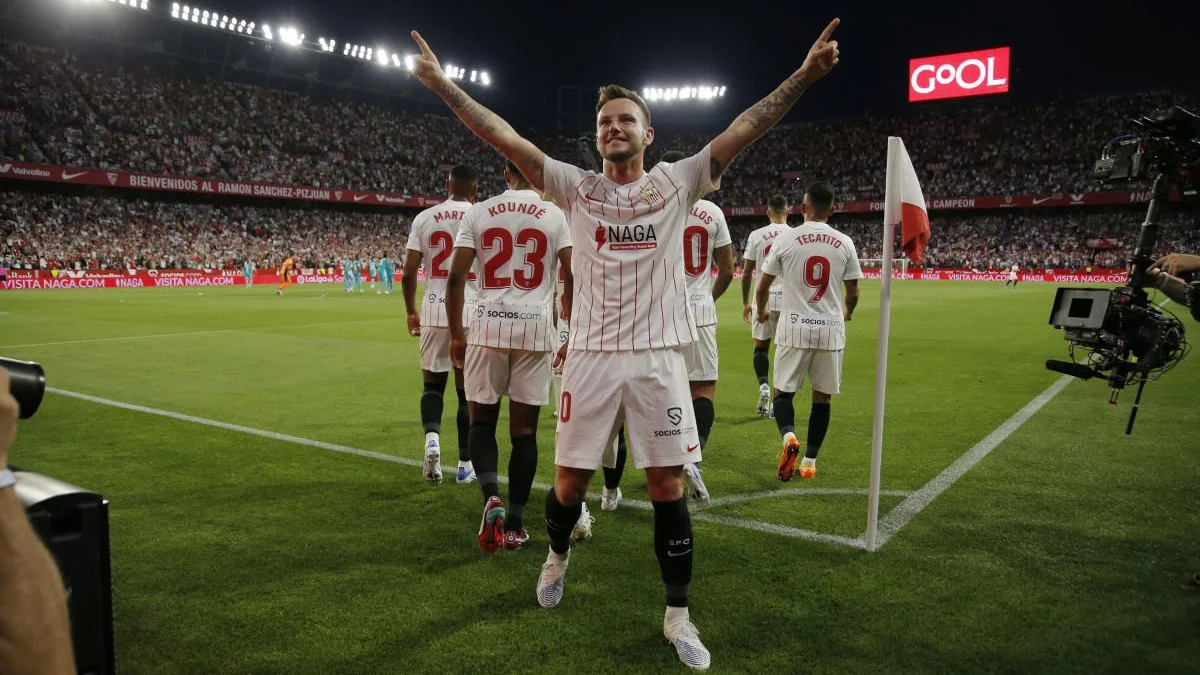
Sevilla entered 2026-27 under Luis Garcia Plaza, who took charge in March 2026 after the dismissal of Matias Almeyda. Garcia Plaza signed a deal to 30 June 2027 and arrived with experience from 229 LaLiga matches with Levante, Getafe, Villarreal, and Alaves. The club finished 17th in LaLiga in 2024-25 and 13th in 2025-26, a run that shows how far the team have slipped from the European places.
The task for 2026-27 is survival first, then stability. The club have not won a Spanish domestic trophy since the 2010 Copa del Rey, and the Europa League pedigree no longer guarantees European qualification. A solid mid-table finish and a strong cup run would mark real progress for a club in transition.
Why Sevilla Matters
Sevilla matter because the club turned a second-tier European competition into a personal empire. The seven Europa League titles stand as a record that no other club has come close to matching. The scouting model under Monchi also became famous across Europe, with smart signings and player development keeping the club competitive against richer rivals.
The Seville derby with Real Betis adds another layer. For neutral fans, Sevilla offer proof that a well-run club with a clear plan can beat the giants of Europe on a regular basis.
Conclusion
From the foundation in 1890 to seven Europa League titles, Sevilla built a history based on patience, smart recruitment, and knockout nerve. The Sanchez-Pizjuan remains one of the great European grounds. In 2026-27, the club fight to restore stability, with the Europa League record standing as a reminder of what Sevilla can achieve.
When was Sevilla founded?
Sevilla was formed on 25 January 1890 as Sevilla Foot-ball Club. The club rank as the second oldest sporting club in Spain devoted solely to football.
How many Europa League titles has Sevilla won?
Sevilla has won a record seven UEFA Cup and Europa League titles, in 2006, 2007, 2014, 2015, 2016, 2020, and 2023. The club have won all seven finals played.
How many LaLiga titles has Sevilla won?
Sevilla has won one LaLiga title, in the 1945-46 season. The club has also won five Copa del Rey titles, most recently in 2010.
Who manages Sevilla in the 2026-27 season?
Luis Garcia Plaza manages Sevilla in the 2026-27 season. He took charge in March 2026 on a deal to 30 June 2027.


2 Comments