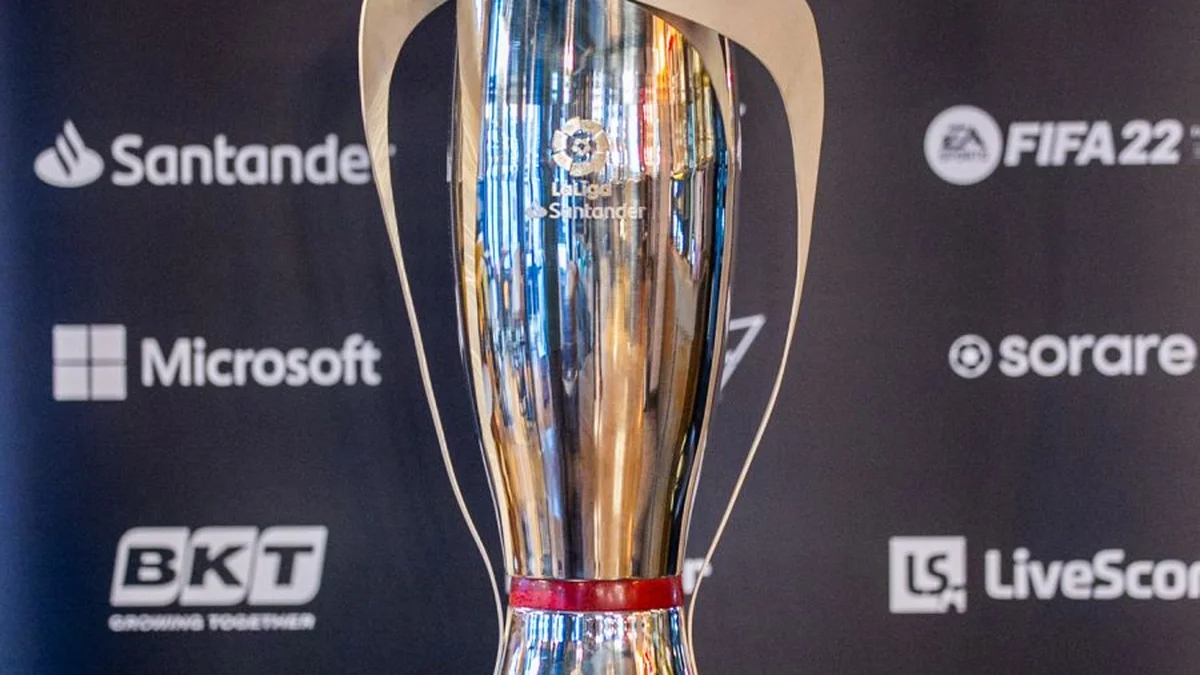
How LaLiga Works: Format, Points, Relegation and Tiebreakers Explained
LaLiga looks simple on the surface. Twenty clubs play each other, points decide the champion, and the bottom three go down. Behind that simple picture sits a set of rules that shape every weekend, from the fight for the title to the battle for Europe and the fight to avoid relegation.
This guide explains how LaLiga works in plain terms. It covers the basic format, the points system, the tiebreakers that settle level finishes, European qualification, and promotion and relegation. It also shows how the season calendar builds pressure from August to May.
The basic format
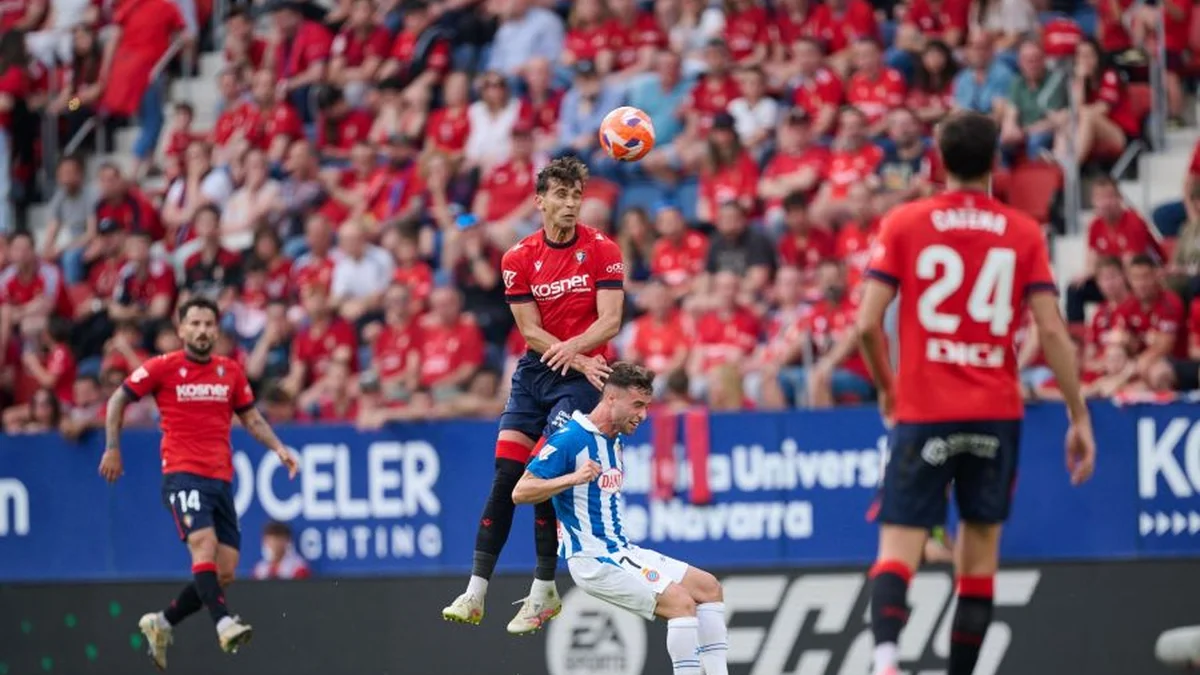
LaLiga is the top flight in Spain. Twenty clubs take part in a double round robin. Each club plays every other club twice, once at home and once away. That gives each club 38 matches across the season. With 20 clubs, the league produces 380 matches per season in total.
The season runs from August to May. The champion is the club with the most points at the end of the season. There is no playoff for the title and no split of the league into groups. The table after 38 matchdays is final.
The points system
Teams receive three points for a win, one point for a draw, and no points for a loss. The system rewards winning. A draw can feel useful in a tight relegation fight, but a win changes the table far faster. Over 38 games, consistency matters more than one great month.
The record points totals show how high the bar can rise. In 2009-10, Real Madrid reached 96 points and still finished behind Barcelona, who reached 99 points. Real Madrid then won the title in 2011-12 with a record 100 points, a record 121 goals scored, and a record plus 89 goal difference. Barcelona matched the 100 points record in 2012-13. Those seasons proved that a great team can still lose the title in LaLiga, because the standard at the top stays so high.
Tiebreakers when teams finish level
When two or more clubs finish with equal points, LaLiga does not use overall goal difference first. The first test is head to head. If all clubs involved have played each other twice, the tie is broken by the results of the matches between those clubs. For a tie between two clubs, the tie is broken using head to head goal difference, without an away goals rule. For a tie between more than two clubs, the tie is broken using head to head points, then head to head goal difference from the games between those clubs.
If the two legged games between all clubs involved have not been played, or if the head to head rules do not break the tie, the next tests are total goal difference, then total goals scored. If the tie still stands, the winner is decided by Fair Play scales. In that scale, a yellow card counts as 1 point, a doubled yellow card or ejection counts as 2 points, a direct red card counts as 3 points, a suspension or disqualification of a coach, executive, or other club personnel counts as 5 points, misconduct by supporters counts as 5, 6, or 7 points by severity, and a stadium closure counts as 10 points. If the tie is still not broken, it is resolved with a tie break match in a neutral stadium.
The head to head rule changes how fans read the table. A club can sit above a rival on goal difference and still lose a tiebreak if the rival won the direct meetings.
European qualification
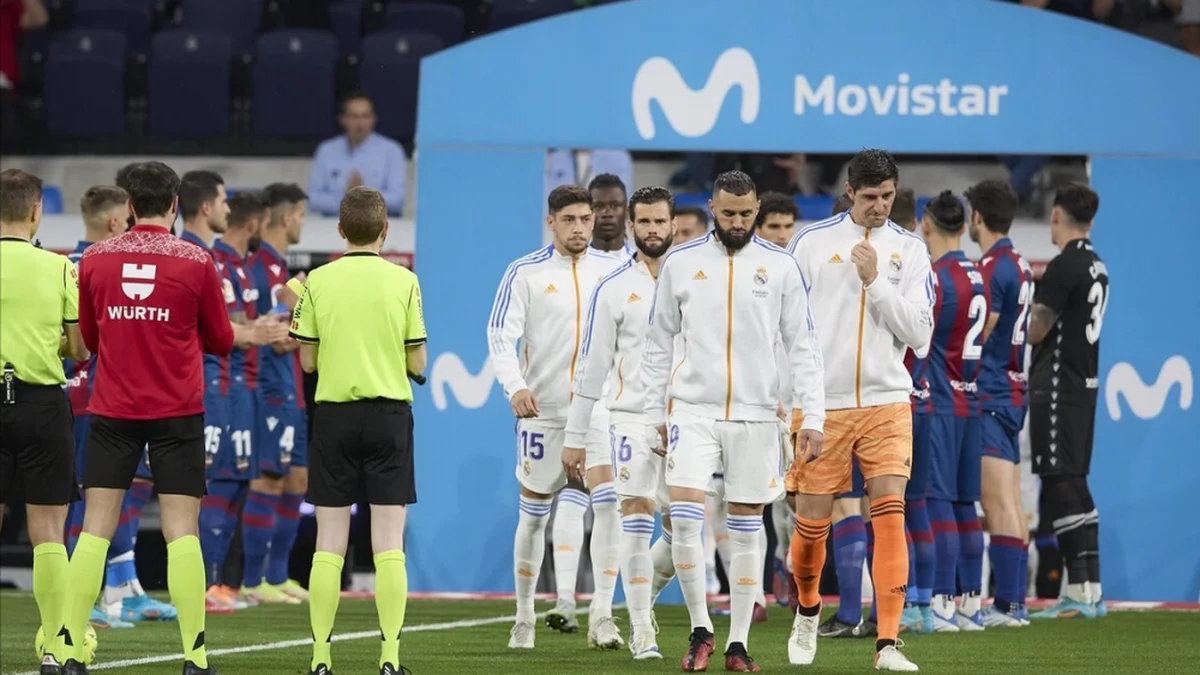
European qualification gives the middle of the table huge stakes. The top four teams in LaLiga qualify for the subsequent season UEFA Champions League league stage, with a possible fifth place dependent on the UEFA coefficient for Spain for the previous season. The winners of the UEFA Champions League and the UEFA Europa League also qualify for the subsequent season Champions League league stage.
The fifth place team in LaLiga and the winner of the Copa del Rey also qualify for the subsequent season UEFA Europa League group stage. If the Copa del Rey winner also finished in the top five places in LaLiga, then the Europa League place reverts to the team that finished sixth in LaLiga. Furthermore, the sixth place team, or seventh if sixth already qualifies due to the Copa del Rey, qualifies for the subsequent season UEFA Conference League play off round. The number of places for Spanish clubs in UEFA competitions depends on the position of Spain in the UEFA country coefficients, which reflect results in UEFA competitions over a five year period.
In practice, the race for fifth, sixth, and seventh often stays alive until the final weeks. If a top club wins the Copa del Rey, the Europa League place slides down the table, and the Conference League place can slide down too.
Relegation and promotion

At the bottom of the table, the stakes are just as high. The three lowest placed teams in LaLiga are relegated to the Segunda Division. The top two teams from the Segunda Division are promoted to LaLiga, with an additional club promoted after a series of play offs involving the third, fourth, fifth, and sixth placed clubs. Three clubs go down, and three clubs come up, so the league stays at 20 clubs.
Relegation changes everything for a club, from income to squad planning to ticket demand. A single win can lift a club out of the bottom three, while a single defeat can drag a mid table club back into danger.
The season calendar and the run in
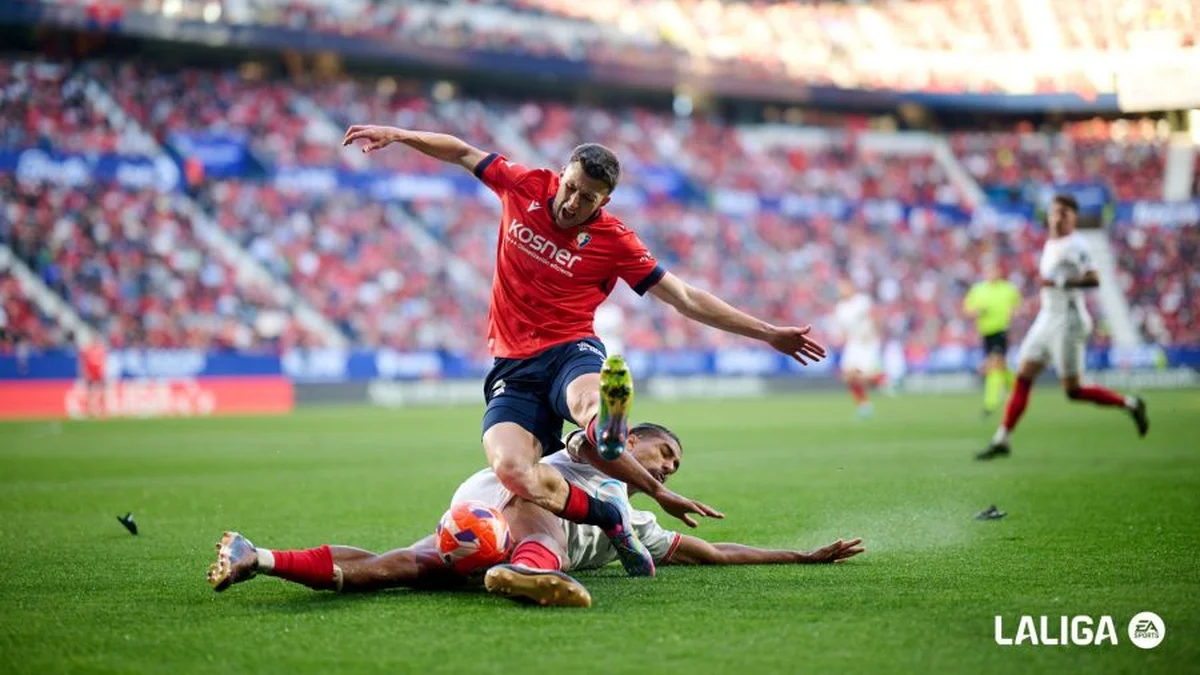
The season runs from August to May, across 38 matchdays. The early weeks set the tone, but the title, the European places, and the relegation places are usually decided in the final stretch. Clubs that manage fitness, rotation, and nerve across the full season tend to finish where the table says they belong.
The calendar also creates clear phases. August and September bring new signings and early form. The winter months test squad depth. Spring brings the decisive run, when head to head games, cup finals, and European ties pile up.
| Final position | Outcome |
|---|---|
| 1st | Champion and Champions League league stage |
| 2nd to 4th | Champions League league stage |
| 5th | Europa League group stage |
| Copa del Rey winner | Europa League group stage |
| 6th | Conference League play off round, or Europa League if the cup place slides down |
| 7th | Conference League play off round if sixth already qualifies through the cup route |
| 18th to 20th | Relegation to the Segunda Division |
The table above gives a quick guide to the main outcomes. The exact European places can shift with the UEFA coefficient and with the Copa del Rey result, but the core pattern stays the same: the top four reach the Champions League, the next places reach the Europa League and the Conference League, and the bottom three go down.
How does promotion to LaLiga work? The Segunda Division play-offs explained
The three clubs relegated from LaLiga are replaced by three clubs from the Segunda Division, known as LaLiga Hypermotion. The second tier has 22 clubs, and each of them plays 42 league matches across the season. The clubs that finish first and second are promoted automatically, with no extra games to play.
The third promotion place is decided by play-offs between the clubs that finish third, fourth, fifth and sixth. The semi-finals pair third against sixth and fourth against fifth, and both rounds are played over two legs, with the second leg at the home of the club that finished higher in the league. The two winners then meet in a two-legged final for the last place in LaLiga.
The play-offs have one rule that surprises many fans: there are no penalty shootouts. If a tie finishes level on aggregate after extra time in the second leg, the club that finished higher in the league table is declared the winner, as set out in the Spanish Football Federation rules quoted by LaLiga. It means league position keeps an extra value all season, and it is why the race for third place in the Segunda Division matters almost as much as the play-off games themselves.
When head-to-head decided the title: the 2006-07 season explained
The head to head rule is not a small detail. It has decided the championship itself. In 2006-07, Real Madrid and Barcelona finished the season level on 76 points each. Barcelona had the better overall goal difference, but in LaLiga that is not the first test. The title went to Real Madrid because of what happened in the two matches between the clubs.
Real Madrid beat Barcelona 2-0 at the Santiago Bernabeu in October 2006, and the return match at Camp Nou in March 2007 finished 3-3, with a teenage Lionel Messi scoring a hat-trick. Those results gave Real Madrid four head to head points, compared with one for Barcelona. The team of Fabio Capello then sealed the title on the final day, 17 June 2007, by beating Mallorca 3-1 at home. Both games still rank among the most famous league meetings between the clubs, and you can read the full story in our El Clasico history.
The lesson still shapes every title race. A win over a direct rival is worth more than three points, because it also builds the head to head advantage that settles a level finish. It is also why the later steps of the tiebreaker ladder, the fair play scale and the neutral ground play-off match, are so rarely reached: the head to head step almost always settles the argument first.
How many substitutes can a LaLiga team make? Matchday rules explained
A LaLiga team can use five substitutes in a match, but they cannot stop the game whenever they like. The five changes have to be made in no more than three in-play windows, so coaches usually group changes together. Substitutions made at half-time do not count as one of the windows, which is why half-time often brings a double change from a team that is chasing the game.
The five-substitute rule is recent. It arrived when football restarted in June 2020 after the suspension of the 2019-20 season, as a way to protect players facing a crowded calendar, and LaLiga kept it permanently afterwards. Before that change, teams could make only three substitutions. The extra changes reward deeper squads and let coaches rest key players in busy weeks, but they also mean a match can look very different in its final half hour.
Matchdays are also shaped by the video assistant referee, known as VAR. LaLiga introduced VAR at the start of the 2018-19 season. The system reviews four types of incident: goals, penalty decisions, direct red cards and cases of mistaken identity. It does not re-referee the whole match, and most checks end without the referee changing the decision, but its presence has changed how players appeal, how crowds celebrate goals and how long big matches now run.
How does the LaLiga salary cap work? The squad cost limit explained
LaLiga also controls what clubs can spend off the pitch. Every club has a squad cost limit, the maximum amount it can spend across a season. The limit covers fixed and variable salaries, social security payments, collective bonuses, transfer costs including agents’ commissions, and the amortisation of signings. It applies to the registrable squad, meaning the players, the head coach, the assistant coach and the fitness coach, and to the wider squad of reserve and academy players.
Each club works out its own limit from its budget, following the budget rules of LaLiga. The Validation Body of LaLiga then approves the figure or lowers it to protect the financial stability of the club. The limits are published after the summer transfer window closes and are updated again after the winter window, so every club works to a number that is public and checked twice a season.
The limit explains many of the stories that confuse fans each summer. A club can have the money for a transfer fee and still be unable to register a new signing, because the salary of the player and the amortisation of the fee would push it over its limit. Clubs above their limit face restrictions on registering new players until they cut costs or raise income. The system is strict, but it is also why Spanish clubs rarely collapse financially in the way clubs in some other leagues still do.
Has LaLiga always had 20 teams? How the format has changed
The format readers know today took decades to settle. LaLiga began in 1929 with just ten clubs, and each team played only 18 matches in that first season, between February and June 1929. The league grew across the century as Spanish football expanded, and you can follow the whole journey in our complete history of LaLiga. What never changed was the principle behind it: a double round robin, with the champion decided over the full season rather than by a play-off.
Two changes in the mid-1990s reshaped the modern game. From the 1995-96 season, a win brought three points instead of two. Under the old system a draw was worth half a win, so teams often settled late in matches; three points for a win rewarded attacking football and made a draw worth only a third of a victory. That same season the league also expanded to 22 teams for two seasons, after an administrative dispute over relegations left the division oversized. Twenty-two clubs meant 42 matches each and 462 matches across the season, the biggest calendar the league has ever had.
Restoring order meant a hard correction. Five clubs were relegated at the end of the 1996-97 season, and LaLiga returned to 20 teams in 1997, where it has stayed ever since. The constants of the modern format are now familiar: 20 clubs, 38 matches each, 380 matches in total, three points for a win, head to head before overall goal difference when teams finish level, and the bottom three relegated every season. Almost everything fans argue about, from the title race to the fair play scale, sits on top of that settled structure.
How LaLiga works in 2026-27: the new season at a glance
The 2026-27 season uses exactly the format explained in this guide. Twenty clubs play 38 matches each between August 2026 and May 2027, the champion is decided on points, and head to head is ready to settle any tie at the top or the bottom. Nothing about the rules has changed for the new campaign, which is part of the appeal of the league. Barcelona start as defending champions after winning their 29th title on 10 May 2026, and you can see where that triumph fits in our LaLiga winners list.
Real Madrid, the record holders with 36 titles, start the season under Jose Mourinho, appointed on 11 June 2026 on a three-year deal, and they are chasing their first championship since 2023-24. Atletico Madrid, champions in 2013-14 and 2020-21, remain the most credible challengers to the big two. Below them, the races for the Champions League places, the Europa League and the Conference League play-off run to the same rules, and the same outcomes table, as in any other season.
At the bottom, three famous names return. Racing Santander, Deportivo La Coruna and Malaga come up from the Segunda Division, replacing Mallorca, Girona and Oviedo, who were relegated in 2025-26. The return of Deportivo is the headline story: the Galician club won LaLiga in 1999-2000 and remains one of only nine champions in the history of the league. Racing Santander and Malaga also bring top-flight experience of their own.
For all three promoted clubs, the first target is the simplest one in this guide: finish outside the bottom three, because 18th, 19th and 20th go straight back down. Survival, Europe and the title are all decided by the same 38 matches, which is why the format endures.
Conclusion
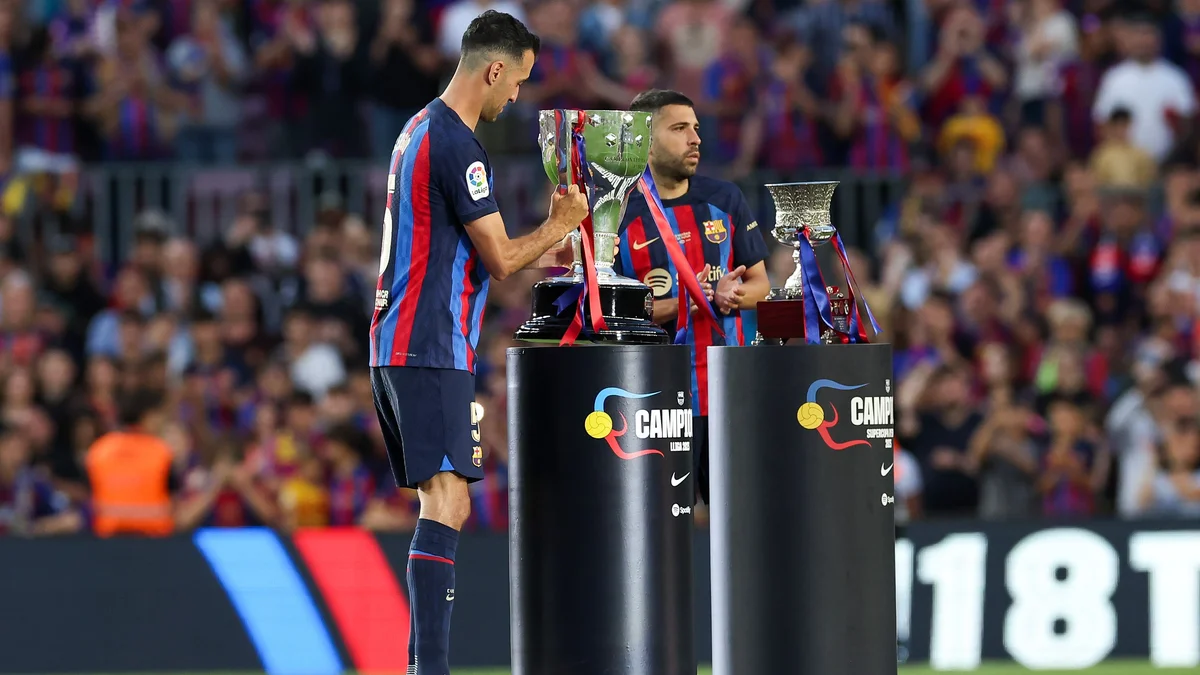
LaLiga works because the format is clear and the stakes stay high. Twenty clubs play 38 games each. Three points for a win, one for a draw, and none for a loss decide the champion. Head to head results settle level finishes before goal difference. The top four reach the Champions League, with a possible fifth place through the coefficient. The Copa del Rey winner shapes the Europa League places, and the Conference League place follows behind. At the bottom, three clubs go down and three come up. Once those rules are clear, every matchday feels sharper, and every late goal in May makes sense.
Frequently Asked Questions
How does a team get promoted to LaLiga?
The top two teams in the Segunda Division (LaLiga Hypermotion) are promoted automatically. The teams finishing third, fourth, fifth and sixth enter two-legged play-offs for the final place, and if a play-off tie is level after extra time, the team that finished higher in the league goes through.
How many substitutes can a LaLiga team make in a match?
A LaLiga team can make five substitutions in a match. They must be made in no more than three in-play windows, although changes at half-time do not count as one of the windows.




2 Comments