Deportivo La Coruna: History, Stadium, Trophies, Legends and 2026-27 Guide
Deportivo La Coruna are the sleeping giants of Galicia. The club from A Coruna won LaLiga in 2000, beat Real Madrid in a Copa del Rey final at the Bernabeu and reached the Champions League semi-finals. Then came the fall, all the way to the third tier. The return to LaLiga in 2026 completed one of the great comebacks in Spanish football, and it restored a champion to the top flight.
This guide covers Deportivo history from the 1906 foundation to the 2026-27 season. It explains the stadium, the trophies, the legends and the reasons why Super Depor still matter across Europe.
Deportivo History: From 1906 To Super Depor
Deportivo was founded on 8 December 1906 as Club Deportivo de la Sala Calvet. The club reached the top flight for the first time in the 1941-42 season, and the 1949-50 season brought the first golden age, with a runners-up finish in LaLiga. Local legends such as goalkeeper Juan Acuna, a four-time winner of the Zamora Trophy, and Chacho, the first player from A Coruna to appear at a World Cup, starred in that era. A young Luis Suarez, born in the city, began his career at the club before becoming the only Spanish-born winner of the Ballon d’Or.
The decades that followed brought drift between divisions and long years in the lower leagues from 1973. The revival started in 1991, when Deportivo returned to LaLiga after an 18-year absence. Under president Augusto Cesar Lendoiro and coach Arsenio Iglesias, the club became a title contender within two seasons. With Bebeto and Mauro Silva from Brazil and the Galician midfielder Fran, Deportivo finished third in 1992-93 and fought Barcelona for the title in 1993-94. On the final day, a last-minute penalty missed by Miroslav Djukic against Valencia handed the championship to Barcelona.
The consolation came quickly. Deportivo won the first Copa del Rey in club history in 1995, beating Valencia in a final interrupted by a storm, and added the Supercopa the same year. Under coach Javier Irureta, the club reached the peak. Deportivo won LaLiga in the 1999-2000 season with five points to spare, then won the Copa del Rey again in 2002 with a famous victory over Real Madrid at the Bernabeu on the day of the Madrid club centenary. Deportivo played in the Champions League for five straight seasons from 2000-01 to 2004-05, reached the quarter-finals twice and the semi-finals in 2003-04, where Jose Mourinho and Porto won the tie with a single penalty goal.
The decline was slow and then sudden. Deportivo fell out of the top flight, dropped to the third tier and spent years rebuilding. The comeback came in the 2025-26 season. Deportivo finished second in Segunda with 77 points, sealed promotion with a 2-0 win at Valladolid, with Cameroonian striker Bil Nsongo scoring both goals, and returned to LaLiga after eight seasons away.
Deportivo Stadium: Riazor
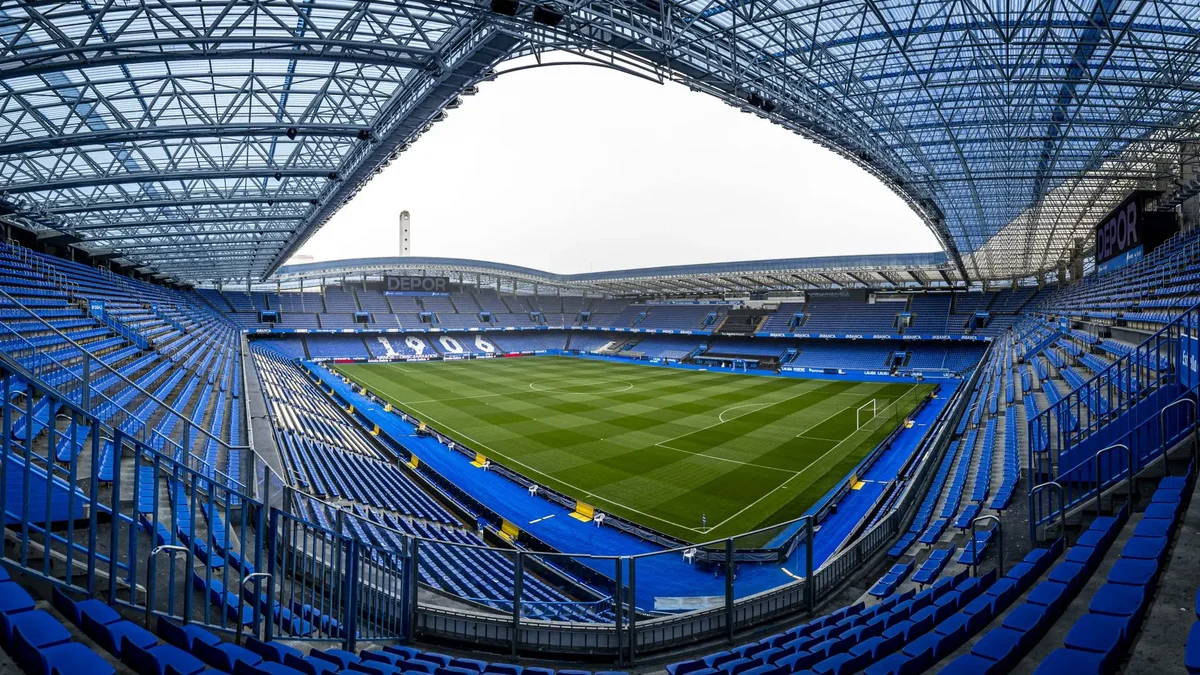
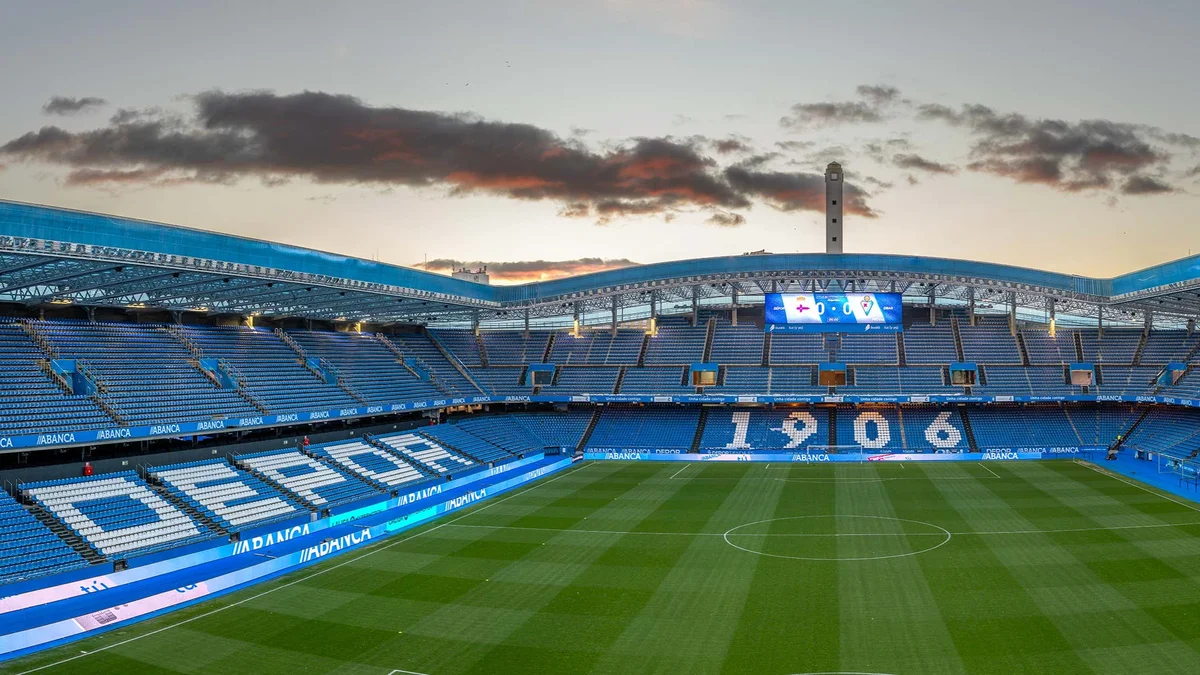
Deportivo play home matches at Riazor, in A Coruna. The stadium opened in 1944 and has been the home of the club ever since. The current capacity stands at 32,490, and the ground sits close to the Atlantic coast, which gives Riazor one of the most striking settings in Spanish football. Fans can find the club on the official LaLiga club page for RC Deportivo.
Riazor witnessed the title celebrations in 2000, the 4-0 comeback win over Milan in the 2004 Champions League quarter-final and the painful nights of the decline. The stadium has hosted Spain internationals and remains a symbol of Galician pride. When the ground is full and the blue and white flags wave, Riazor feels like a fortress again.
Deportivo Trophies And Records
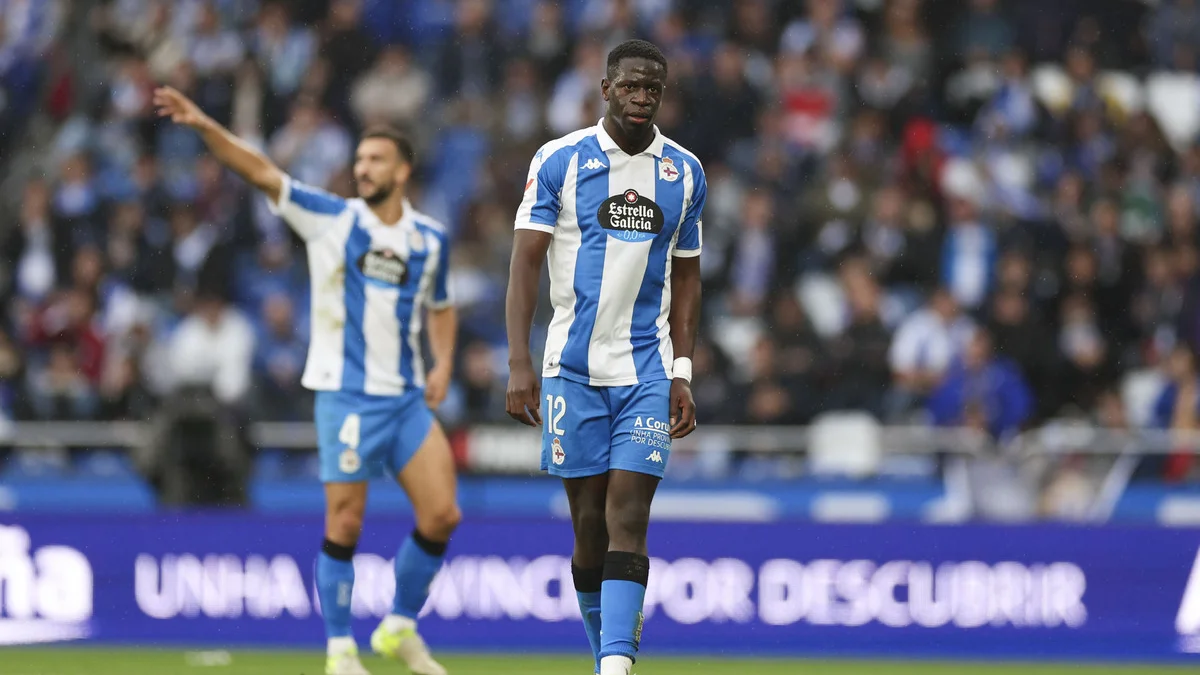
Deportivo own one of the strongest trophy records outside the traditional giants of Spanish football. The LaLiga title in 2000, two Copa del Rey titles and three Supercopa titles place the club among the historic names of the league. The Champions League semi-final in 2004 remains the best European run in club history.
| Key Fact | Detail |
|---|---|
| Founded | 8 December 1906 |
| City | A Coruna, Galicia |
| Stadium | Riazor |
| Capacity | 32,490 |
| Nickname | Los Blanquiazules, The Blue and Whites |
| LaLiga titles | 1, in 1999-2000 |
| Copa del Rey titles | 2, in 1994-95 and 2001-02 |
| Supercopa de Espana titles | 3, in 1995, 2000 and 2002 |
| Best European run | Champions League semi-finals, 2003-04 |
| Manager in 2026-27 | Antonio Hidalgo |
Deportivo Legends: The Greatest Players in Club History
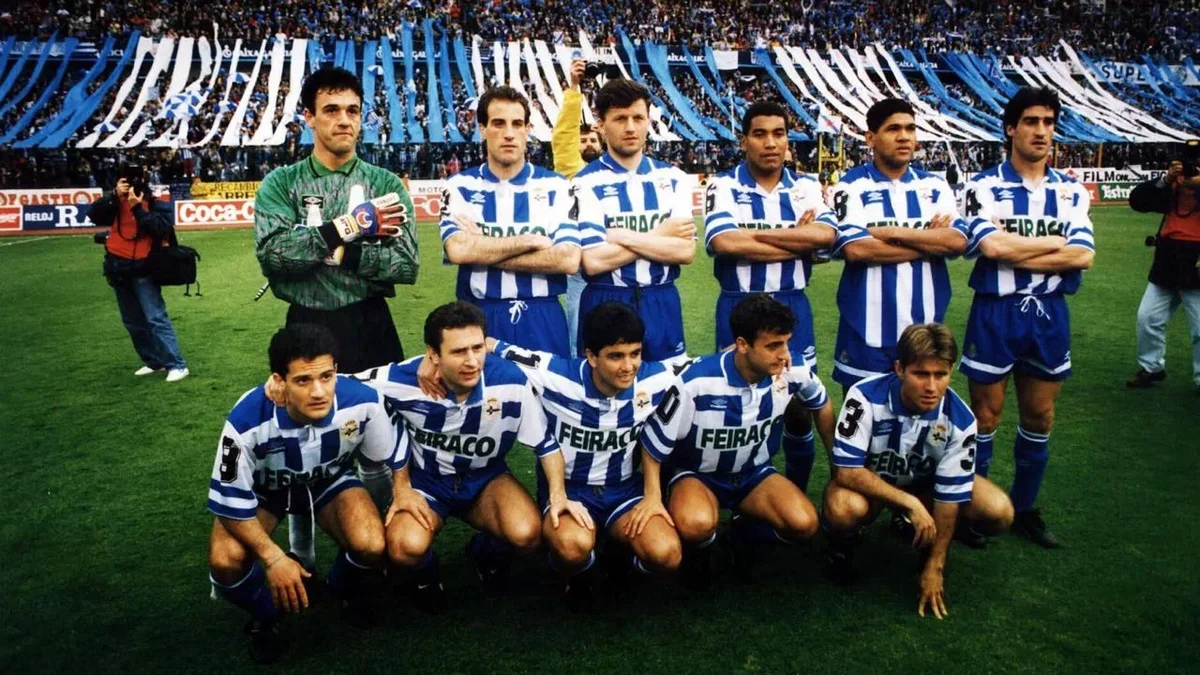
Fran Gonzalez stands at the top of every Deportivo legend list. The Galician midfielder spent his whole career at the club and captained the title-winning team. Mauro Silva anchored the midfield through the golden era, while Bebeto brought goals and star power after arriving in 1992. The Brazilian won the Pichichi Trophy as the top scorer in LaLiga in the 1992-93 season.
Roy Makaay scored goals for fun between 1999 and 2003 and won the European Golden Boot in the 2002-03 season as the top scorer across the European leagues. Juan Carlos Valeron played for Deportivo from 2000 to 2013 and controlled matches with vision and elegance. Diego Tristan added goals and flair, while Djalminha brought magic that supporters still talk about. Rivaldo spent one season at the club in 1996-97 before moving to Barcelona and winning the Ballon d’Or.
Manuel Pablo, the long-serving full back, led the club back to LaLiga in 2014 as the last link to the Super Depor team. Goalkeeper Juan Acuna and striker Luis Suarez represent the earlier golden age, while Donato and Paco Liano were key figures in the 1990s rise.
Deportivo In The 2026-27 Season
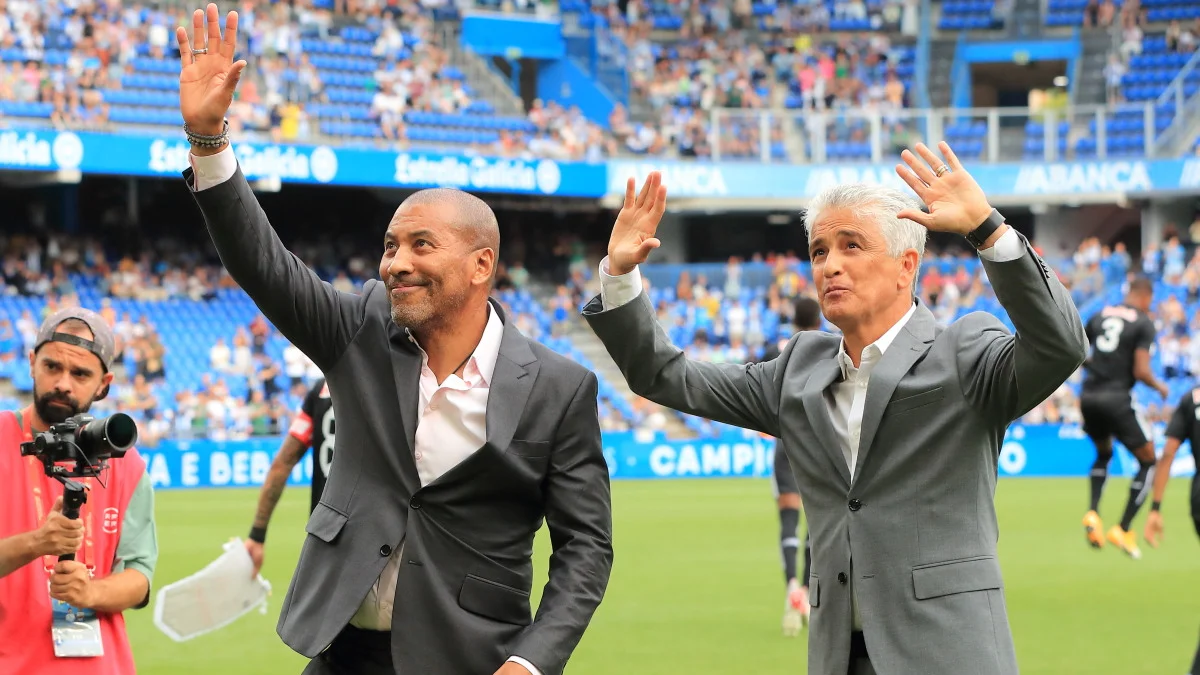
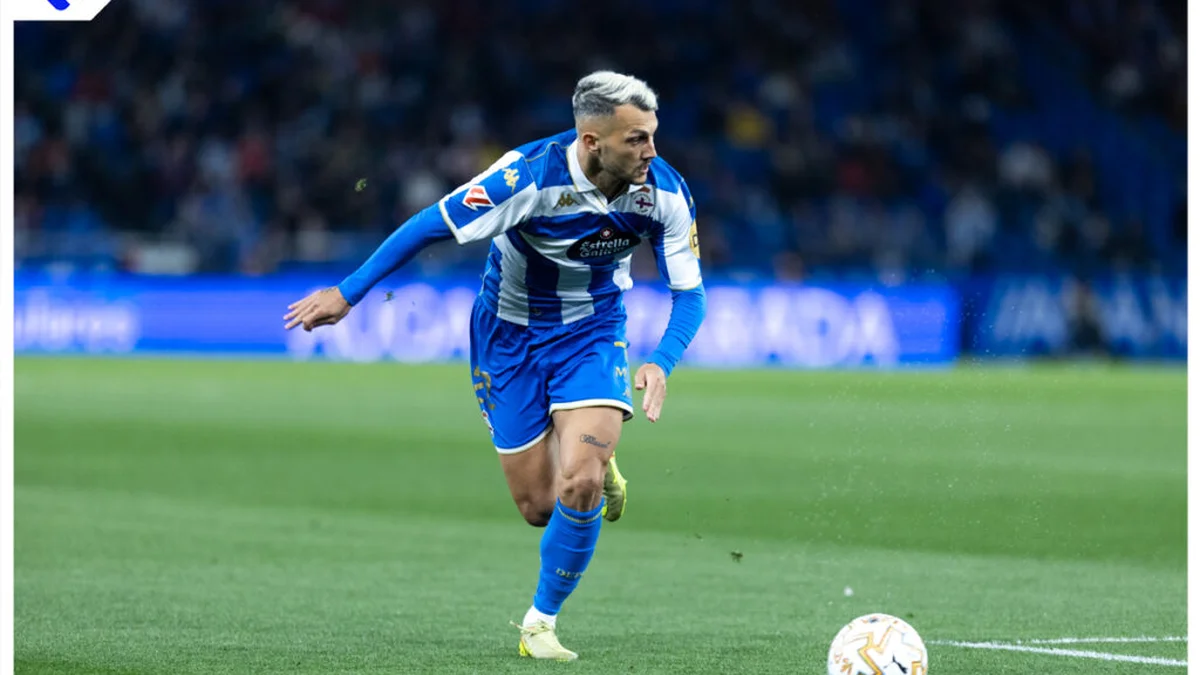
Deportivo entered the 2026-27 season under head coach Antonio Hidalgo, the man who led the promotion campaign. The start was strong. Deportivo went unbeaten in the opening five matches of the LaLiga campaign, then sat eighth in the table after nine matches with 11 points, two wins, five draws and two defeats. Pierre-Emerick Aubameyang led the early scoring with five goals, while Yeremay Hernandez and Luismi Cruz added pace and creativity.
The 1-1 home draw with Levante in October showed both the promise and the work still to do. Deportivo scored in seven of the first eight league rounds, which proved that the attack could compete at the top level. The task for Hidalgo was to turn draws into wins and to make Riazor a place where visiting teams leave with nothing. With every club that has ever won LaLiga now back in the top flight, Deportivo carry the weight of history into every match.
Why Deportivo Matter In Spanish Football
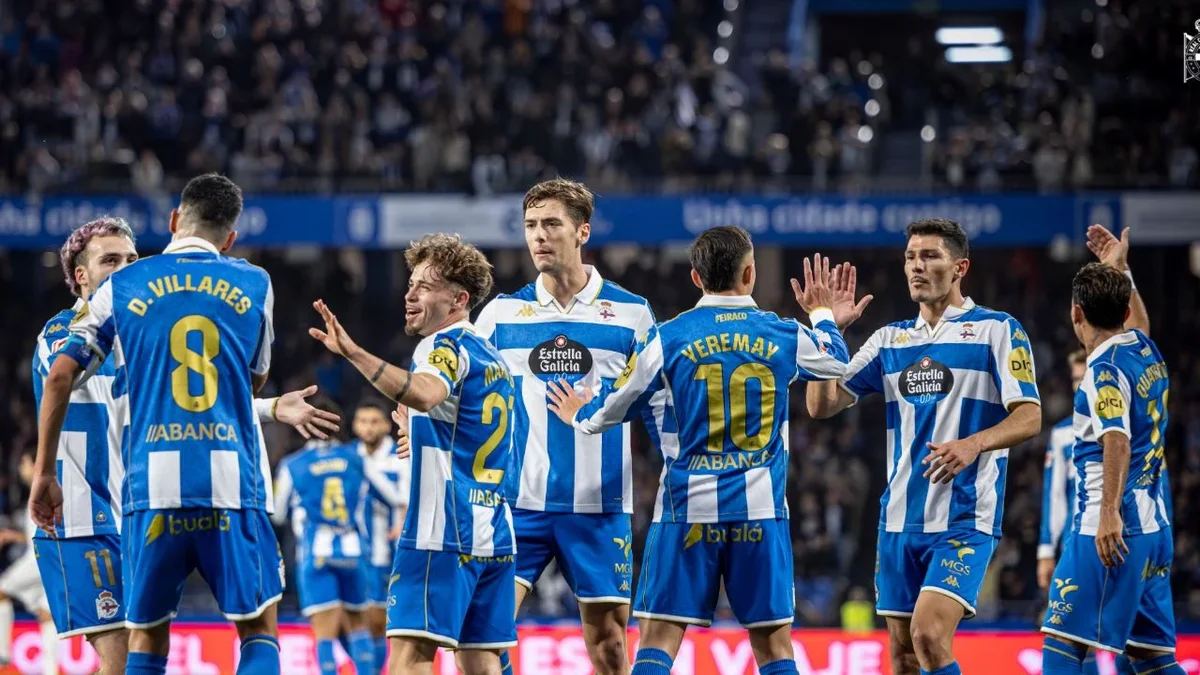
Deportivo matter because the club broke the duopoly. In the late 1990s and early 2000s, Super Depor stood as a genuine third force in Spain, challenging Barcelona and Real Madrid in the league and in Europe. The club matter because they represent Galicia at the highest level, and the Galician derby against Celta Vigo remains one of the most passionate fixtures in the country.
For neutral fans in Europe, Deportivo offer memories of thrilling nights. The 4-0 win over Milan in 2004, the away wins at Arsenal, Manchester United, Juventus and Bayern Munich, and the title triumph in 2000 all form part of Champions League folklore. The return to LaLiga in 2026 gives a new generation the chance to build fresh memories at Riazor.
Conclusion
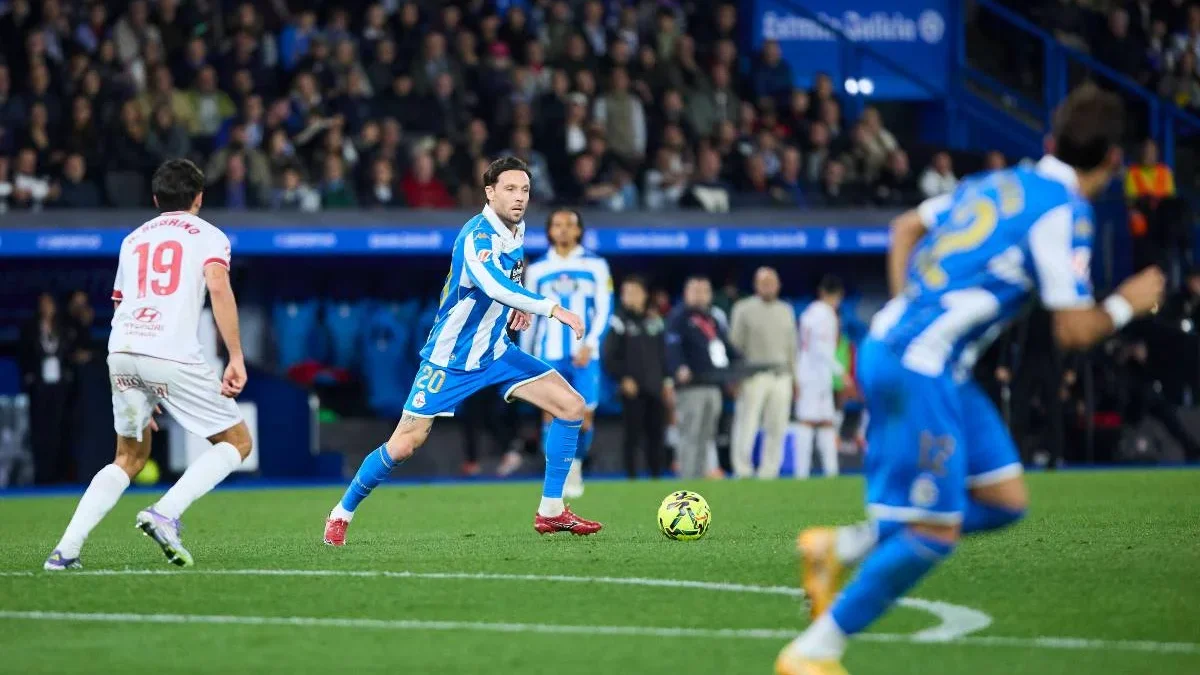
Deportivo history is a story of a small-city club that reached the summit of Spanish and European football, fell to the third tier and climbed all the way back. Founded in 1906, the club have won LaLiga, two Copa del Rey titles, three Supercopa titles and reached the Champions League semi-finals. The 2026-27 season marks a new chapter, and Riazor is ready for it.
When was Deportivo La Coruna founded?
Deportivo was founded on 8 December 1906 as Club Deportivo de la Sala Calvet in A Coruna, Galicia.
When did Deportivo La Coruna win LaLiga, and how many titles have they won?
Deportivo have won one LaLiga title, in the 1999-2000 season, when the club finished five points clear at the top of the table.
What stadium do Deportivo play in and what is the capacity?
Deportivo play at Riazor, which opened in 1944 and has a capacity of 32,490 spectators.
What is the best European run in Deportivo history?
The best European run in Deportivo history is the Champions League semi-final in the 2003-04 season, when Porto won the tie with a single penalty goal after a 0-0 draw at Riazor.


One Comment