Athletic Club: History, Stadium, Trophies, Legends and 2026-27 Guide
Bilbao runs on football, and Athletic Club is the heartbeat of the city. On a match day, the red and white colours are everywhere, on scarves, on balconies, and on shirts worn by grandparents and children alike. The noise inside San Mames is famous across Europe. Athletic Club is not a normal club, because it plays by rules that no other elite club in the world would accept, and it still competes at the highest level year after year.
The story of Athletic Club is a story of identity, loyalty, and patience. This is a club that has never left the Spanish top flight, a club that has lifted the Copa del Rey more often than almost every rival, and a club that builds success from local talent rather than from global shopping. For a neutral fan in Europe, Athletic Club offers something rare in modern football, a team that truly represents a place, a culture, and a community. This guide covers the history, the stadium, the trophies, the legends, and the 2026-27 season.
Athletic Club History: Origins and Early Years

Athletic Club was founded in 1898 in Bilbao, a busy industrial city in the Basque Country. British workers had brought football to the ports and mines of the area, and Basque students who had studied in Britain carried the game back home with fresh enthusiasm. Early meetings at the Zamacois Gym and later at Cafe Garcia in 1901 shaped the first statutes of the club. A merger with Bilbao Football Club followed in the early years, and the combined side won the first Copa del Rey tournament in 1902 under the name Bizcaya. The name Athletic Club became permanent in 1903.
From 1911 onward, Athletic Club followed a policy that still defines the club today. Only players who were born in the Basque Country or who received football training at Basque clubs can play for the team. The policy is known as the cantera policy, and it places a heavy weight on youth development and local roots. Critics have called the rule old fashioned, yet the club has kept it with pride for more than a century. The policy turns every match into a celebration of Basque identity, because the players on the pitch share the same roots as the crowd in the stands.
The 1930s brought the first golden era. Athletic Club won four league titles in the 1930s and built a reputation for fast, direct, and fearless football. Telmo Zarra became the great scoring icon of the following era, and the club kept collecting Copa del Rey titles through the middle of the century. League success returned in the early 1980s, when Athletic Club won back to back league titles in 1983 and 1984. The 1983 title was celebrated with a river barge trip along the Nervion, a tradition known as La Gabarra that remains part of club folklore.
San Mames Stadium
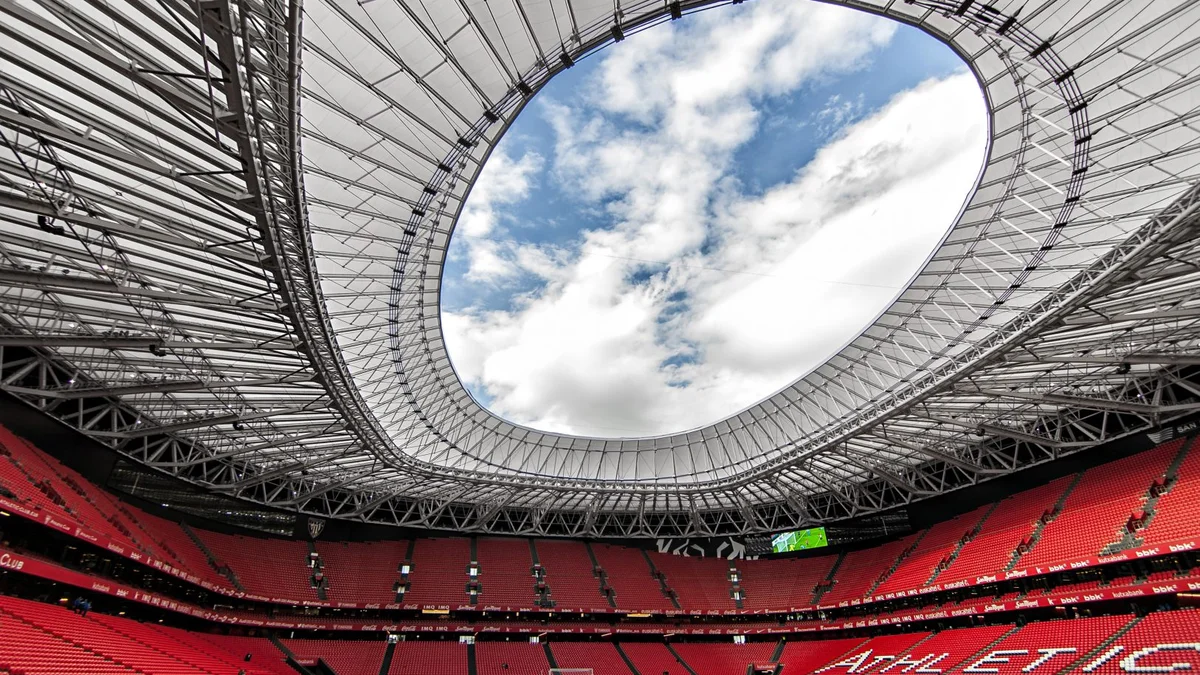
Athletic Club plays home matches at San Mames, a stadium known across Spain as La Catedral, which means The Cathedral. The original San Mames opened in 1913, and Rafael Moreno, known as Pichichi, scored the first goal at the ground. The Pichichi Trophy, awarded each season to the top scorer in La Liga, carries his name. The old stadium stood for a century and hosted some of the most famous nights in Spanish football before it made way for a modern arena on the same site.
The new San Mames opened in 2013, and it kept the nickname, the steep stands, and the intense atmosphere of the old ground. The capacity is 53,289, and the stands rise close to the pitch, which helps the noise stay loud from the first whistle to the last. The illuminated facade has become a landmark in Bilbao. The story of San Mames shows why supporters call the ground the purest form of football, a place where history, identity, and match day passion meet in one bowl.
Trophies and Records
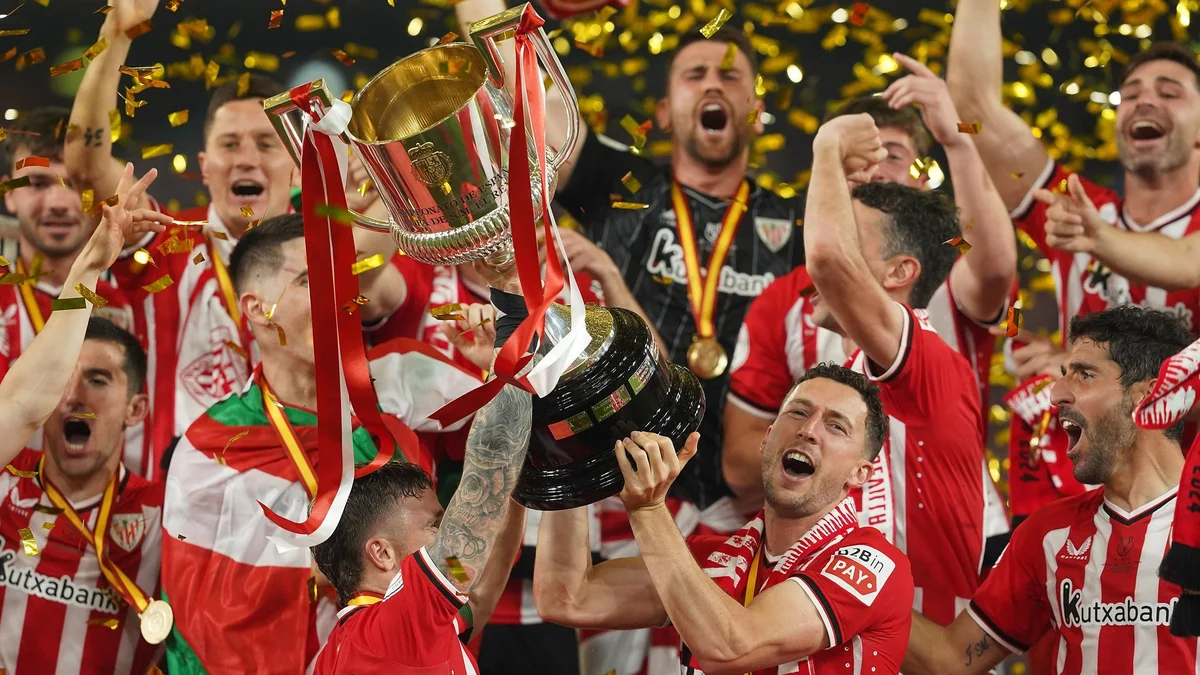
Athletic Club is the fourth most successful club in La Liga by league titles, and it ranks second in the all time Copa del Rey list, behind Barcelona. The club has won eight league titles, with the most recent title in 1984. The Copa del Rey record is even stronger, with 24 titles, including the 2024 final win against Mallorca on penalties. That 2024 victory ended a 40 year wait for the trophy and sent the city into days of celebration. Athletic Club has also won three Spanish Super Cups.
European success has stayed just out of reach. Athletic Club reached the UEFA Cup final in 1977 and again in 2012, and finished as runner up on both occasions. The club has also reached the later rounds of the Champions League and the Europa League in the modern era. The most important record, however, is the one that no trophy can match. Athletic Club is one of only three clubs, along with Real Madrid and Barcelona, that have played every season in the Spanish First Division and have never suffered relegation.
| Key Fact | Detail |
|---|---|
| Founded | 1898 |
| City | Bilbao, Basque Country |
| Stadium | San Mames |
| Capacity | 53,289 |
| La Liga titles | 8 |
| Copa del Rey titles | 24 |
| Spanish Super Cups | 3 |
| Relegations from La Liga | 0 |
Legendary Players
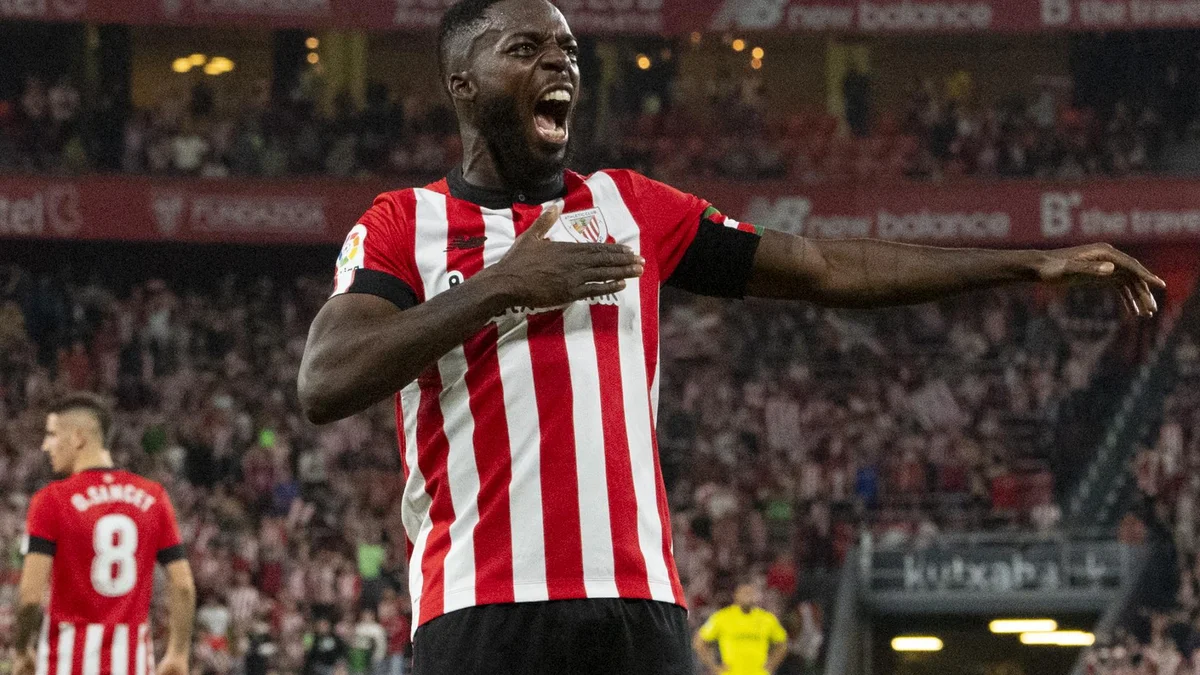
Telmo Zarra stands at the top of Athletic Club folklore. The striker was a scoring machine in the 1940s and 1950s, and his name remains a benchmark for every forward who wears the red and white shirt. Pichichi was the first great star, a lively forward whose early goals helped build the legend of San Mames. Jose Angel Iribar followed as one of the finest goalkeepers in Spanish history, a calm and commanding presence who spent his entire career at the club.
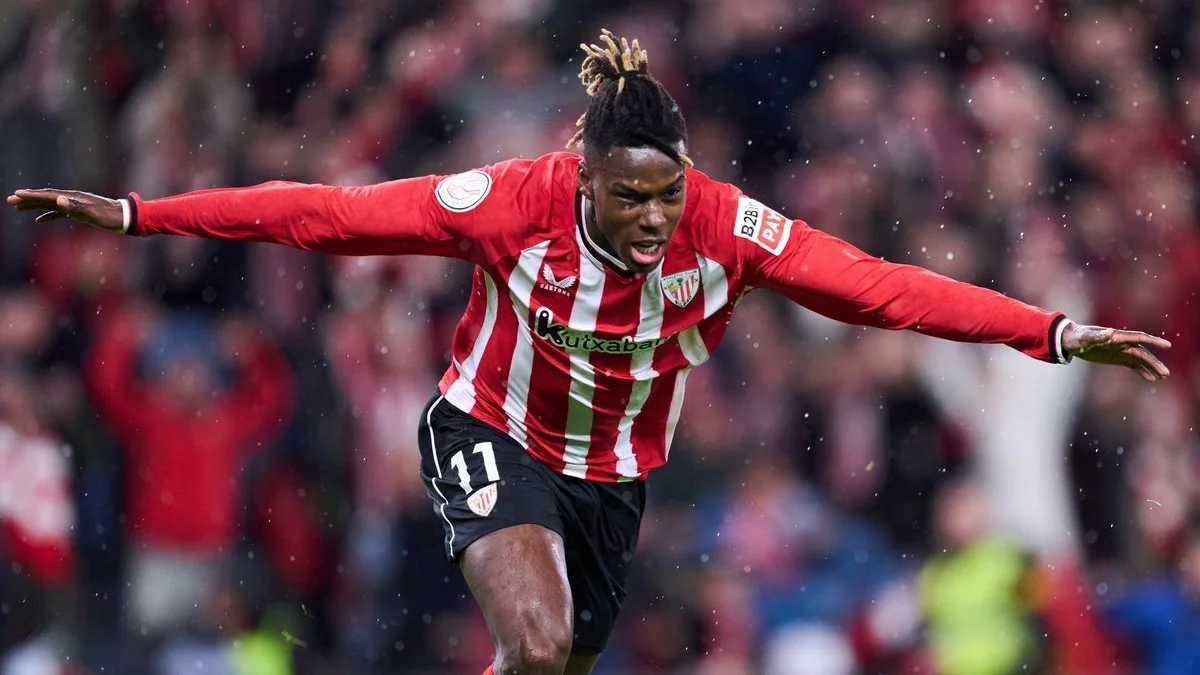
Andoni Zubizarreta carried the goalkeeper tradition into a later era, while Julen Guerrero became the creative heart of the team in the 1990s and a symbol of loyalty to the club. Iker Muniain served as captain for many years and lifted the 2024 Copa del Rey, a moment that closed a long trophy wait for the club and its supporters. Oihan Sancet scored in that 2024 final and represents the new generation of Basque talent that keeps the cantera policy alive.
2026-27 Season Context
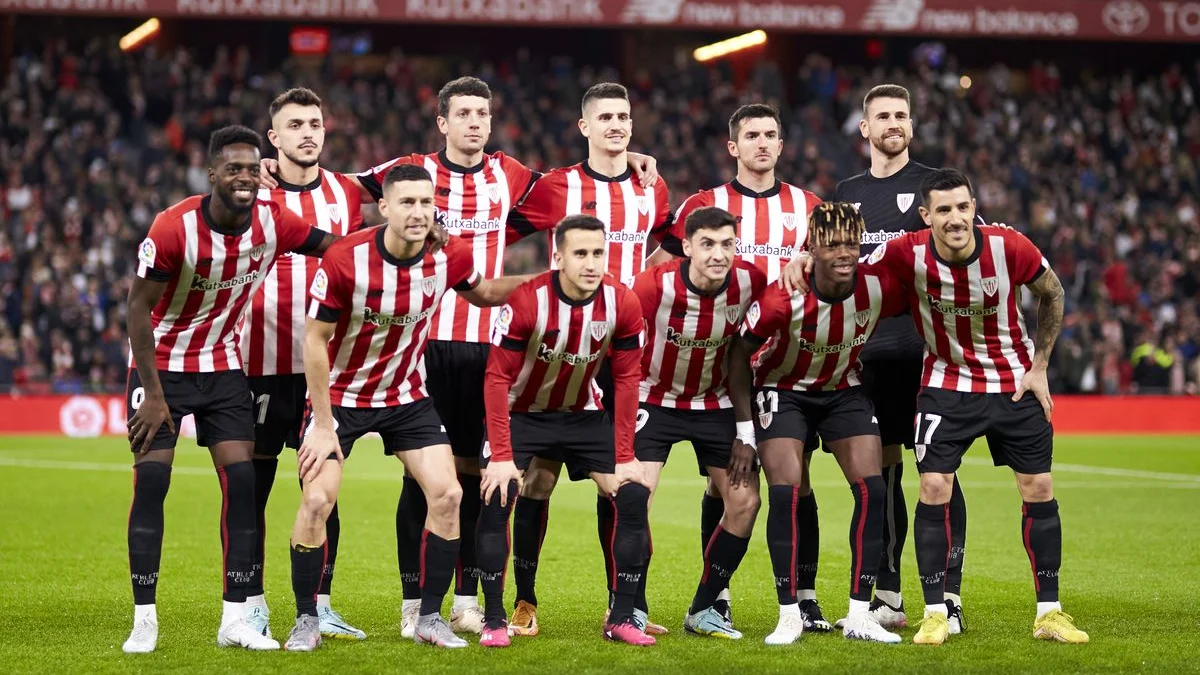
Athletic Club entered the 2026-27 season with Ernesto Valverde as head coach, a manager who has led the club in three spells and who guided the team to the 2024 Copa del Rey title. At the time of writing, after seven league matches, Athletic Club sat in 11th place with nine points, from two wins, three draws, and two defeats. The club had played fewer matches than most rivals at that stage, so the table gave only a partial picture. The target for the season remains clear, a push toward the European places and another strong cup run.
Why Athletic Club Matters

Athletic Club matters because it proves that football can stay local and still compete at the top. In an era of billion euro squads and global recruitment, Bilbao fields a team built entirely from Basque talent. The policy shapes the academy, the scouting, and the identity of every match day.
The club also matters for Spanish football history. Athletic Club helped shape the early years of the league, built one of the first great purpose built stadiums in Spain, and produced players and stories that run through the whole history of the sport in the country. The Basque derby against Real Sociedad remains one of the most passionate fixtures in the calendar, a match that divides a region and fills San Mames with colour and noise.
Athletic Club in 2026-27: How Is the Season Going Under Edin Terzic?
The 2026-27 season brought a changing of the guard at San Mames. The third spell of Ernesto Valverde as head coach ended when his contract expired in May 2026, closing a run that delivered the 2024 Copa del Rey and fourth place in 2024-25 before the team slipped to 12th last season. Edin Terzic took over as head coach on 1 July 2026, inheriting a squad built almost entirely at Lezama and captained by Inaki Williams.
Nine rounds into the wider league calendar, Athletic sat 11th in the table with nine points, but that position needs context. Los Leones had played only seven matches, two fewer than most rivals, because their Matchday 8 trip to Rayo Vallecano was postponed and their rearranged Matchday 6 visit to Levante was scheduled for Wednesday 21 October 2026. The record reads two wins, three draws and two defeats, with seven goals scored and only six conceded. The standout result was a 3-0 home win over Atletico de Madrid on 5 September, alongside a 2-0 victory at Celta Vigo, while defeats came away to Barcelona and at home to Sevilla. Since then, three consecutive draws, against Elche, Alaves and Valencia, have made Athletic hard to beat but left them chasing the wins that would lift them towards the European places.
The summer had already given the squad a golden glow. Unai Simon, Aymeric Laporte and Nico Williams all returned to Bilbao as World Cup winners with Spain, a point of real pride for a club that produces its own internationals. With games in hand on the teams above them and a Copa del Rey campaign still to come, the aims for the first season of Terzic remain the European places and another deep cup run.
Athletic Club Squad 2026-27: The Key Players to Know
Because of the cantera policy, the Athletic Club squad changes more slowly than most elite squads, and its spine is homegrown. These are the players carrying the team in 2026-27.
| Player | Position | Role in the team |
|---|---|---|
| Unai Simon | Goalkeeper | The number one of Spain and a 2026 World Cup winner, the latest star of the famous goalkeeping line of Lezama. |
| Dani Vivian | Centre-back | The organiser of the defence, a Lezama graduate who has become one of the most reliable defenders of La Liga. |
| Aymeric Laporte | Centre-back | A World Cup winner with Spain in 2026 and the senior figure in the back line. |
| Oihan Sancet | Attacking midfielder | The creative spark between midfield and attack, who scored in the 2024 Copa del Rey final. |
| Mikel Jauregizar | Central midfielder | A Lezama graduate who has established himself as a fixture in the middle of the pitch. |
| Inaki Williams | Forward | The club captain. Fifth on the all-time appearances list of Athletic with 518 official matches, and the leading active scorer with 116 goals. |
| Nico Williams | Winger | A 2026 World Cup winner with Spain and the most explosive wide player of the team. |
| Gorka Guruzeta | Striker | The top scorer of Athletic in 2023-24 and again in 2025-26, when he scored 17 goals in all competitions. |
Behind the first eleven, the bench is filled from Lezama and the reserve side, Bilbao Athletic, so an injury usually opens the door to another local youngster rather than to the transfer market.
The Basque Derby: Athletic Club vs Real Sociedad Explained
The fiercest rivalry of Athletic is the Basque derby against Real Sociedad of San Sebastian, the fixture that stops the Basque Country twice every season. The two clubs share a language, a culture and a belief in local talent, which makes the meetings intense on the pitch yet unusual in the stands, where the derby is long known for rival supporters mixing more freely than in almost any other Spanish fixture.
The most recent meeting went the way of Athletic, a 1-0 win at Anoeta on 2 October 2026 in the final of the Euskal Herria Txapela, the Basque friendly tournament. The league derbies are close behind: Real Sociedad visit San Mames on Sunday 1 November 2026, and the return fixture at Anoeta is scheduled for 2 May 2027.
The regional calendar is busy elsewhere too. Deportivo Alaves, from Vitoria-Gasteiz, held Athletic to a goalless draw at San Mames in September, and the short trip east to face Osasuna at El Sadar follows on 7 November. Few clubs in Europe play so many of their biggest matches so close to home.
Athletic Club Records: Top Scorers, Most Appearances and Recent Finishes
The record books show how durable the greats of Athletic have been. The figures below come from the official statistics of the club, which count every official match the team has played.
Who is the all-time top scorer of Athletic Club?
Telmo Zarra stands alone at the top. The club credits Zarra with 335 official goals: 251 in La Liga and 81 in the Copa del Rey, plus three in the old Copa Eva Duarte. Behind him come Bata, with 209, and Guillermo Gorostiza, with 200. Aritz Aduriz, with 172, is the highest scorer of the modern era, while Inaki Williams is the leading scorer still playing, on 116.
| Player | Official goals | Goals in La Liga |
|---|---|---|
| Telmo Zarra | 335 | 251 |
| Bata | 209 | 105 |
| Guillermo Gorostiza | 200 | 108 |
| Dani | 199 | 147 |
| Aritz Aduriz | 172 | 118 |
Who has played the most matches for Athletic Club?
Goalkeeper Jose Angel Iribar holds the appearances record with 614 official matches, a mark that still stands. Oscar de Marcos, with 573, and Iker Muniain, with 560, the captain who lifted the 2024 Copa del Rey, follow him. Inaki Williams has climbed into the top five while still playing, reaching 518 appearances.
| Player | Official appearances |
|---|---|
| Jose Angel Iribar | 614 |
| Oscar de Marcos | 573 |
| Iker Muniain | 560 |
| Txetxu Rojo | 541 |
| Inaki Williams | 518 |
What were the La Liga finishes of Athletic Club in the last five seasons?
The recent pattern is of a side living around the European places: eighth twice, then fifth and fourth as the Copa del Rey came home in 2024, before the slide of last season to 12th. The record books also hold one of the most famous results of Spanish football, the record league win of Athletic, a 12-1 victory over Barcelona at San Mames in February 1931.
| Season | La Liga finish | Season highlight |
|---|---|---|
| 2021-22 | 8th | Copa del Rey semi-finalists |
| 2022-23 | 8th | Copa del Rey semi-finalists |
| 2023-24 | 5th | Copa del Rey winners |
| 2024-25 | 4th | Europa League semi-finalists |
| 2025-26 | 12th | Champions League league phase |
The record books hold another famous scoreline from the early years: on 17 February 1929, Athletic beat Espanyol 9-0 at San Mames in the league, one of the biggest wins in the official history of the club. More recently, Oscar de Marcos, second on the all-time appearances list, stayed on after hanging up his boots and now works on the staff of Edin Terzic as an analyst, keeping two decades of dressing-room knowledge inside the club.
Lezama: The Academy That Feeds Athletic Club
Every Athletic story leads back to Lezama. The club opened its Lezama facilities in 1971, in the town of Lezama, about 15 kilometres from Bilbao, creating a training centre for the professional team and a football academy for its youth sides. The club calls the complex the bedrock of its philosophy, because the youth teams based there underpin the principle of Athletic of fielding only homegrown players.
The pathway runs from the youngest age groups, through a network of partner clubs across the Basque Country, then to CD Basconia and the reserve side, Bilbao Athletic, before the final step up to San Mames. The famous arch that once crowned the old San Mames now stands at Lezama, a daily reminder to every youngster of where the road leads. The current first team shows the system working: Unai Simon, Dani Vivian, Oihan Sancet, Mikel Jauregizar and the Williams brothers, Inaki and Nico, all came through the own academy of the club.
Lezama is also why the club survives its own success. When a star eventually leaves, the replacement is usually already training a few pitches away. The goalkeeping line alone, from Iribar through Zubizarreta to Unai Simon, shows how a single position can be covered for decades by the same production line.
San Mames on the European Stage: The Finals Hosted in Bilbao
The new San Mames has quickly become a finals venue. On 21 May 2025 it staged the UEFA Europa League final, in which Tottenham Hotspur beat Manchester United 1-0, and in 2024 it hosted the UEFA Womens Champions League final, where Barcelona beat Lyon 2-0. Grounds outside the traditional football capitals of Europe are rarely trusted with two finals so soon after opening.
The old San Mames had its own European night to remember: the second leg of the 1977 UEFA Cup final, when Athletic beat Juventus 2-1 in Bilbao but lost the trophy on away goals. To see how San Mames compares with the rest of the great grounds of Spain, read our complete guide to LaLiga stadiums.
Conclusion
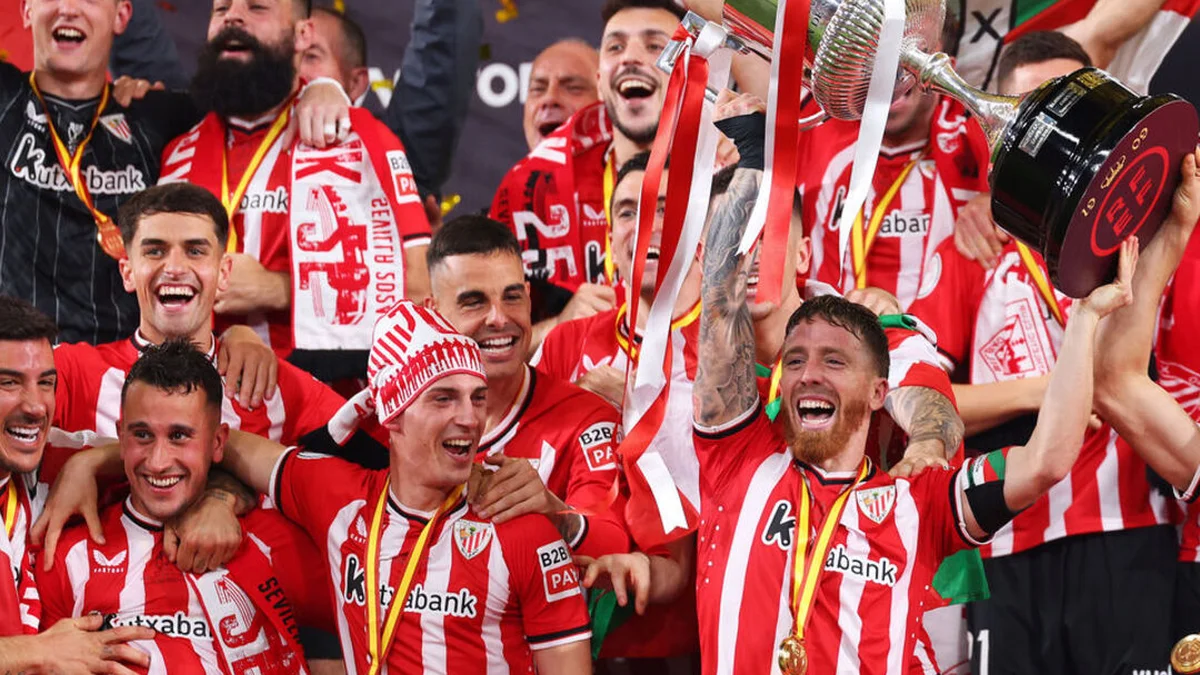
Athletic Club is a club with deep roots, a unique philosophy, and a trophy record that few teams in Spain can match. Eight league titles, 24 Copa del Rey titles, and an unbroken run in the top flight tell the story of a team that refuses to follow the normal path. The 2026-27 season is another chapter in that story, with Valverde at the helm and San Mames at full voice.
Frequently Asked Questions
When was Athletic Club founded?
Athletic Club was founded in 1898 in Bilbao. The club held its first board meeting at Cafe Garcia in 1901, and the name Athletic Club became permanent in 1903.
Which stadium does Athletic Club use?
Athletic Club plays at San Mames in Bilbao, a stadium known as La Catedral. The current ground opened in 2013 on the site of the old stadium, and the capacity is 53,289.
How many trophies has Athletic Club won?
Athletic Club has won eight La Liga titles, 24 Copa del Rey titles, and three Spanish Super Cups. The most recent Copa del Rey win came in 2024 against Mallorca.
Has Athletic Club ever been relegated?
No. Athletic Club is one of only three clubs, along with Real Madrid and Barcelona, that have played every season in the Spanish First Division without relegation.
What is the Basque-only policy of Athletic Club?
Athletic Club only field players who were born in the Basque Country or trained at Basque clubs, a policy in place since 1911. It is known as the cantera, or homegrown, policy, and the Lezama academy of the club exists to feed the first team with local talent.
Who is the all-time top scorer of Athletic Club?
Telmo Zarra is the all-time top scorer of Athletic Club with 335 official goals, including 251 in La Liga and 81 in the Copa del Rey. Bata is second with 209 goals, and Guillermo Gorostiza is third with 200, according to the official statistics of the club.





13 Comments