Levante: History, Stadium, Trophies, Legends and 2026-27 Guide
Levante UD carry one of the most stubborn identities in Spanish football. The club from Valencia has spent more than a century in the shadow of a bigger city rival, yet it keeps coming back. Relegation has never finished the story. Financial trouble has never finished the story. Levante return, regroup and fight again, and that resilience explains why neutrals across Europe enjoy watching the Frogs.
This guide covers Levante history from the 1909 foundation to the 2026-27 season. It explains the stadium, the trophies, the legends and the reasons why this club matters far beyond one city in eastern Spain.
Levante History: From 1909 To The Top Flight
Levante was founded on 6 September 1909 as Levante Football Club. The club took its name from the Levante beach in La Malvarrosa, close to the port area where the earliest matches were played. Those roots shaped the identity of the club. Levante became the team of the working-class neighbourhoods near the docks, while city rival Valencia CF, formed ten years later in 1919, grew into the bigger institution.
The first trophy arrived in 1928, when Levante won the Valencian Championship. After the Spanish Civil War, Levante merged with Gimnastico FC in 1939, and the modern Levante UD took shape. Progress was slow. The club reached the top flight for the first time in the 1963-64 season and finished tenth, but the following decades brought constant movement between divisions. Levante dropped as low as the third tier and climbed back again, a pattern that defined much of the twentieth century.
The modern era began with promotion to LaLiga in 2004, followed by a return in 2010 that finally produced stability. The 2011-12 season remains the landmark campaign. Levante finished sixth in LaLiga, the best league finish in club history, and qualified for European football for the first time. In the 2012-13 UEFA Europa League, Levante beat Motherwell in the play-off round, finished second in a group with Twente, Hannover 96 and Helsingborg, and then beat Olympiacos in the round of 32 before Rubin Kazan ended the run in the round of 16. The club also reached the Copa del Rey semi-finals in the 2020-21 season, another sign of how far Levante had travelled.
Relegation in 2022 started a new rebuilding phase. Levante finished third in Segunda in 2022-23 and lost in the promotion play-offs. Two seasons later, the club won the Segunda title in 2024-25 and returned to the top flight. In the 2025-26 LaLiga season, Levante finished sixteenth and secured survival, which set up another year among the elite in 2026-27.
Levante Stadium: Estadi Ciutat de Valencia
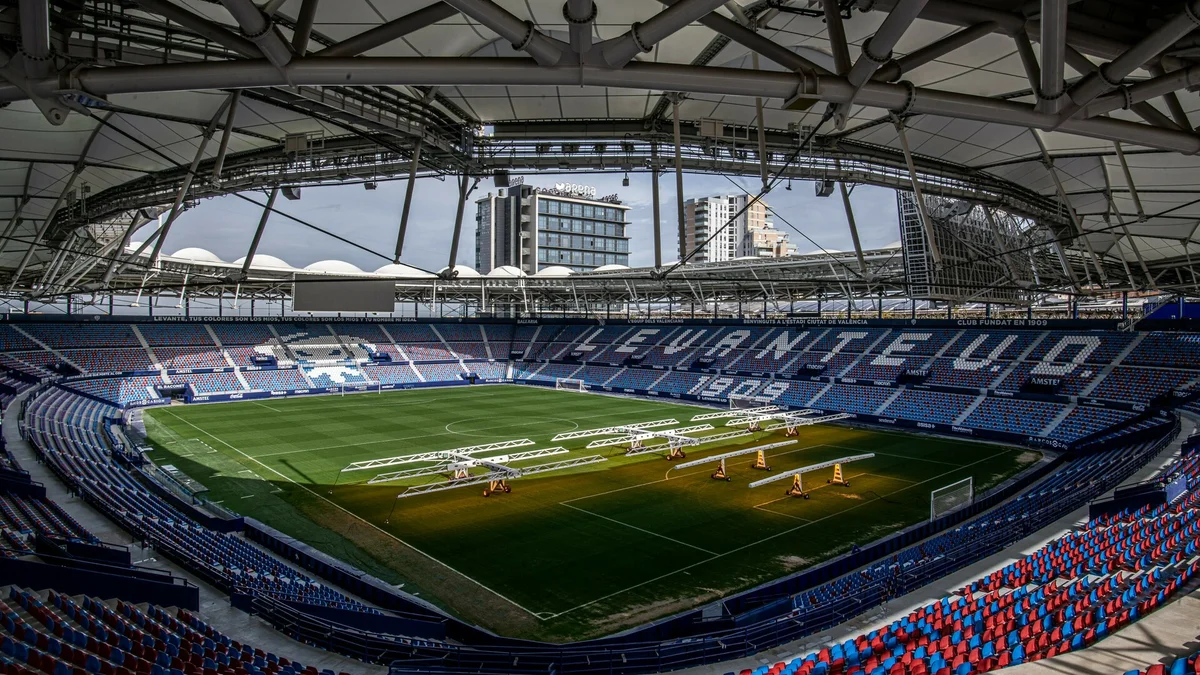
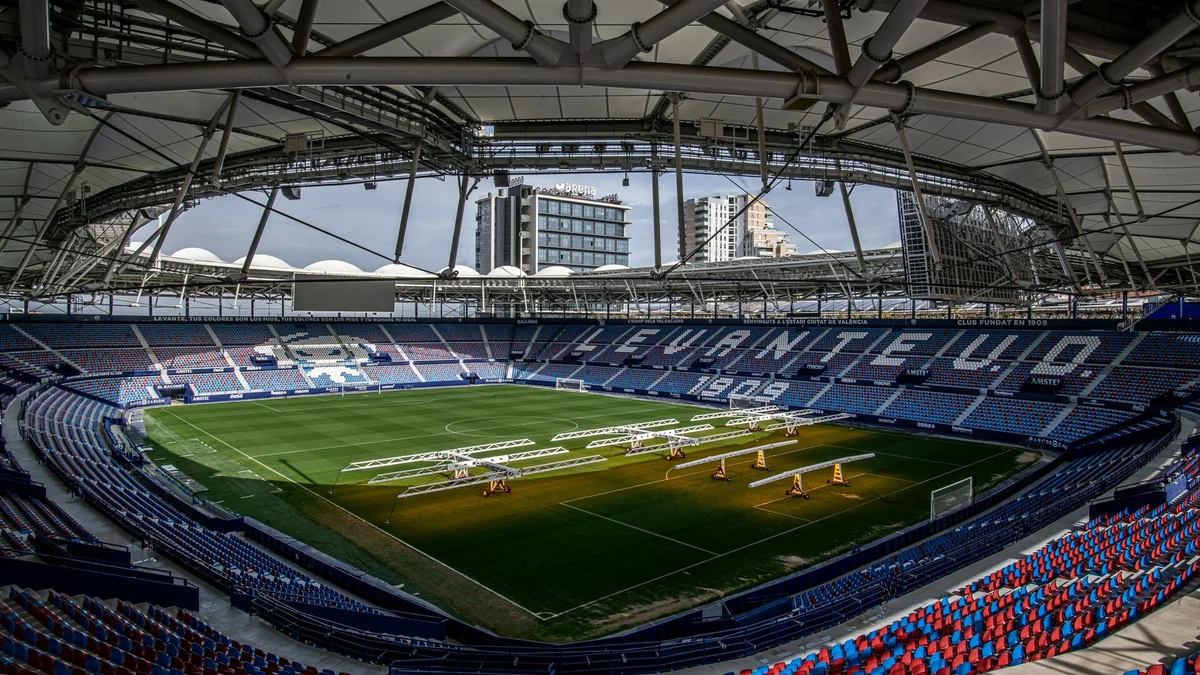
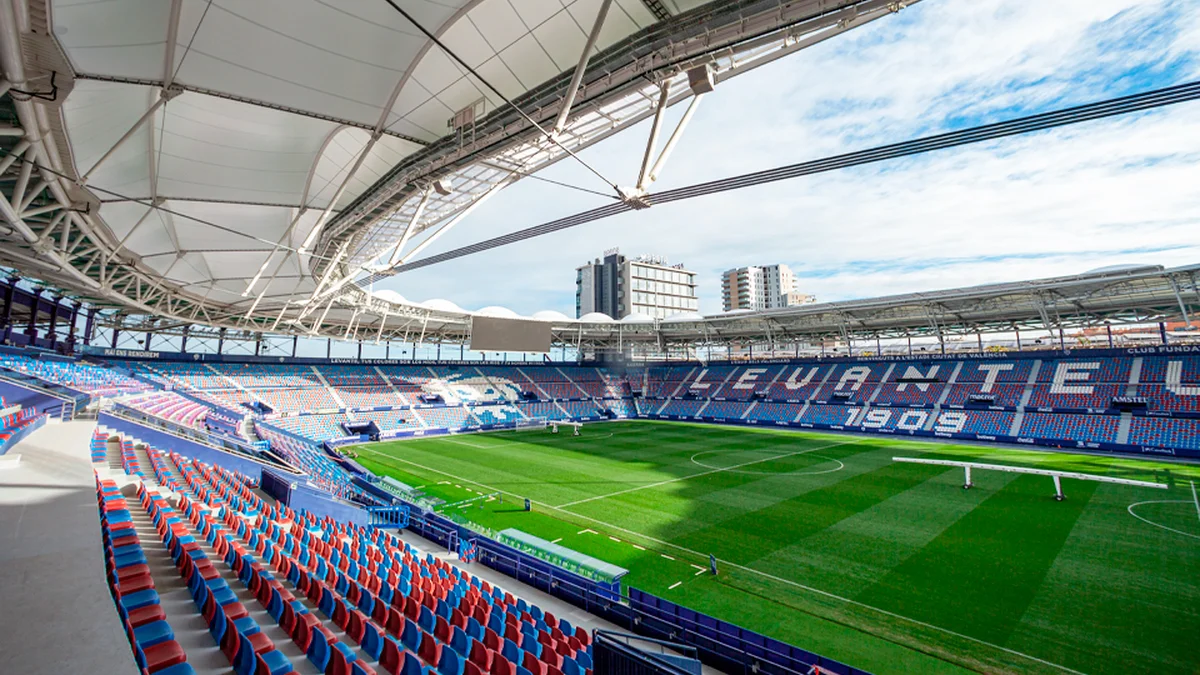
Levante play home matches at the Estadi Ciutat de Valencia, in the city of Valencia. The stadium opened in 1969 and has been the home of the club ever since, after earlier years at grounds near the port and at the Estadio de Vallejo. The current capacity stands at 26,354, which makes it one of the smaller grounds in LaLiga, but the tight stands and the passionate home support create a loud and hostile atmosphere for visiting teams.
The stadium has been remodelled over the years to improve facilities, while the location in the north of the city keeps it close to the neighbourhoods that formed the original fan base. For visiting supporters, the Ciutat de Valencia offers a classic Spanish matchday experience, with bars and streets full of colour before kick-off and a steep, close-up view of the action once the game starts.
The stadium opened on 9 September 1969, and its pitch measures 107 by 69 metres. The ground has even hosted the club through unusual times. When the 2019-20 season resumed behind closed doors during the COVID pandemic, Levante finished the campaign at the Estadi Olimpic Camilo Cano in La Nucia while renovation work was carried out at the Ciutat de Valencia, before returning home.
Levante Trophies And Records
Levante history includes no LaLiga title and no Copa del Rey title. The trophy cabinet reflects a club that has fought for promotion rather than for championships. The honours that matter most to supporters are the Segunda titles, the sixth-place finish in 2011-12 and the European campaign that followed.
| Key Fact | Detail |
|---|---|
| Founded | 6 September 1909 |
| City | Valencia, Spain |
| Stadium | Estadi Ciutat de Valencia |
| Capacity | 26,354 |
| Nickname | Granotes, The Frogs |
| Best LaLiga finish | 6th, 2011-12 |
| Segunda Division titles | 3, in 2003-04, 2016-17 and 2024-25 |
| Best European run | Europa League round of 16, 2012-13 |
| Manager in 2026-27 | Luis Castro |
Levante Legendary Players
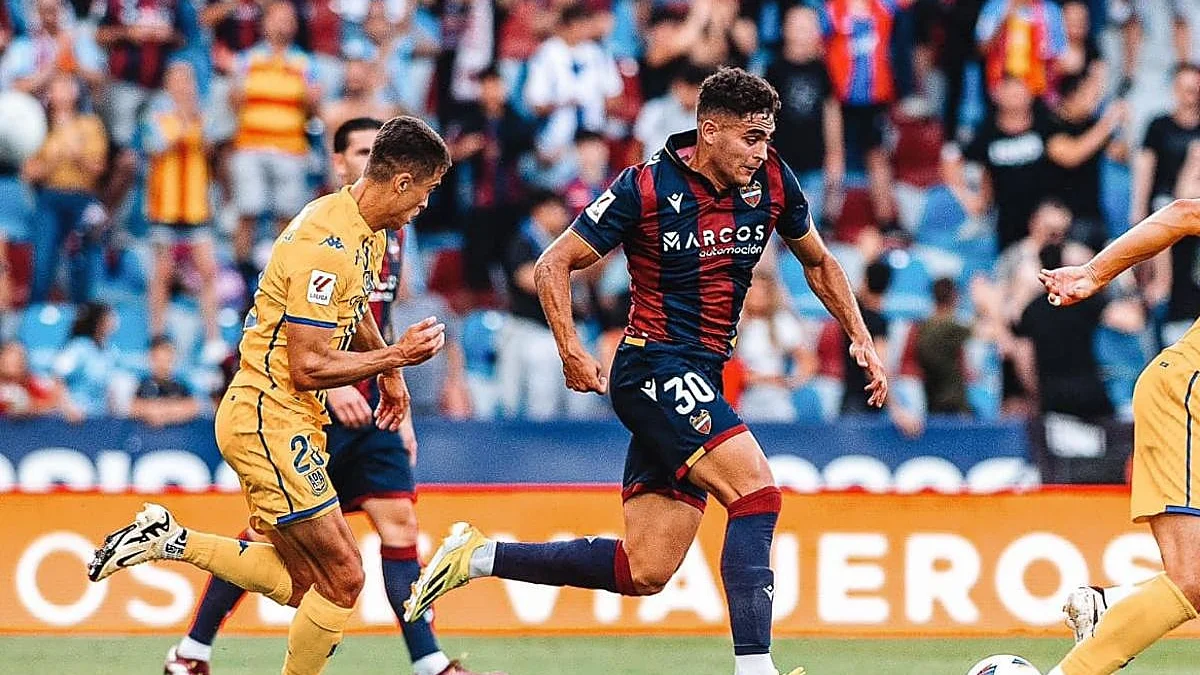
Jose Luis Morales stands as the modern symbol of Levante. The forward served as captain for years, led the team through promotion pushes and relegation battles, and delivered goals in the biggest matches, including strikes against Real Madrid and Atletico Madrid during the 2020-21 campaign. Supporters call him El Comandante, and the nickname captures his leadership on the pitch.
Keylor Navas built his reputation at Levante before becoming one of the most decorated goalkeepers in world football. The Costa Rica international was named the best goalkeeper in LaLiga in the 2013-14 season while playing for Levante, and his performances at the 2014 World Cup in Brazil convinced Real Madrid to sign him. Navas went on to win three Champions League titles with Real Madrid, but his rise started at the Ciutat de Valencia.
Jefferson Lerma arrived in 2015 as a young Colombian midfielder with little noise around him. He left in 2018 as a full Colombia international, a World Cup player and the most expensive sale in Levante history when Bournemouth signed him. Arouna Kone also left a mark as a powerful and prolific striker, while Felipe Caicedo, Obafemi Martins and Enis Bardhi all produced memorable spells in the blue and red shirt.
Levante In The 2026-27 Season
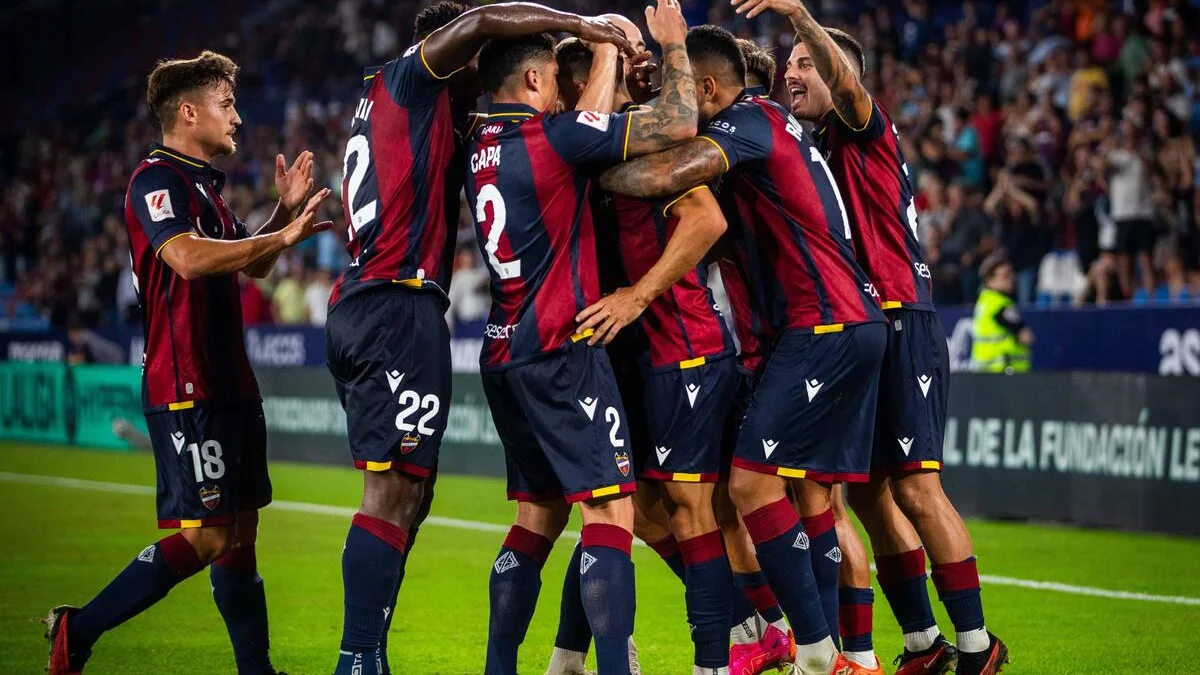
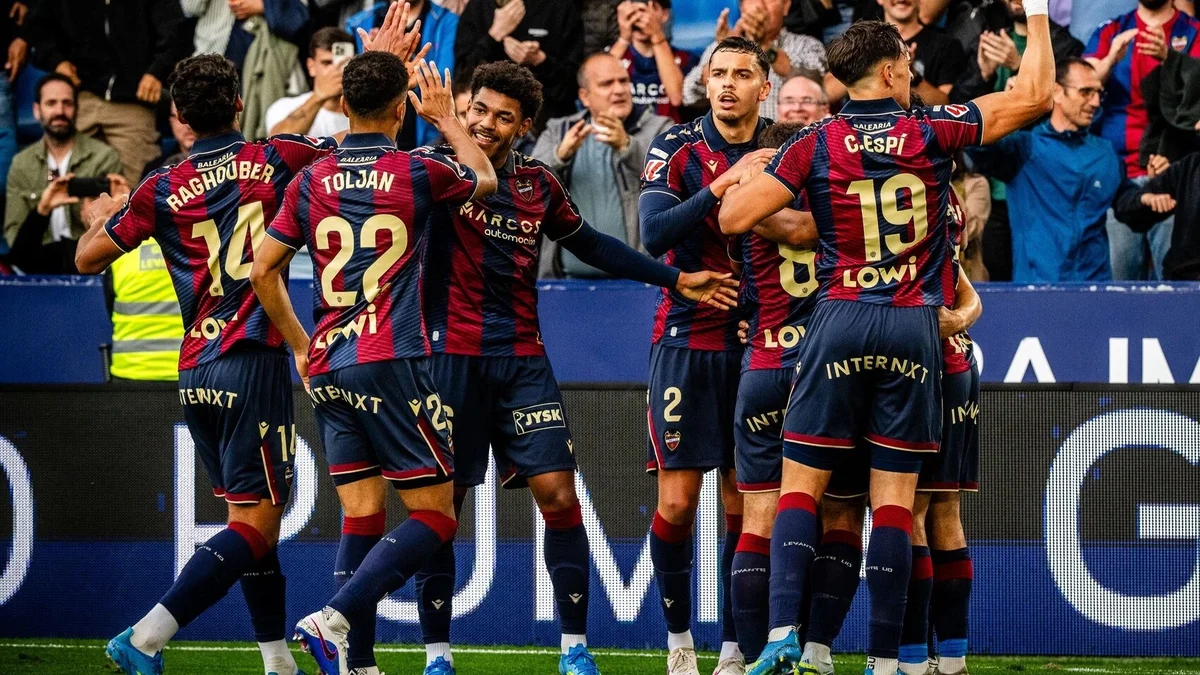
Levante entered the 2026-27 season under head coach Luis Castro with survival as the clear target. The early weeks showed both the promise and the problems of the squad. Levante beat Real Betis 5-2 at home at the end of August, a result that showed the attack could hurt any team. The defence proved less reliable, with 15 goals conceded in the first seven league matches.
A 3-3 home draw with Sevilla and a 1-1 draw away at Deportivo La Coruna in October showed the fighting spirit of the team. Levante sat seventeenth after eight rounds with seven points, one win, four draws and three defeats. The attack shared the load, with Roger Brugue and Ivan Romero each scoring three goals in the early rounds. The challenge for Castro was to turn draws into wins and to tighten a defence that kept giving opponents chances.
Why Levante Matter In Spanish Football
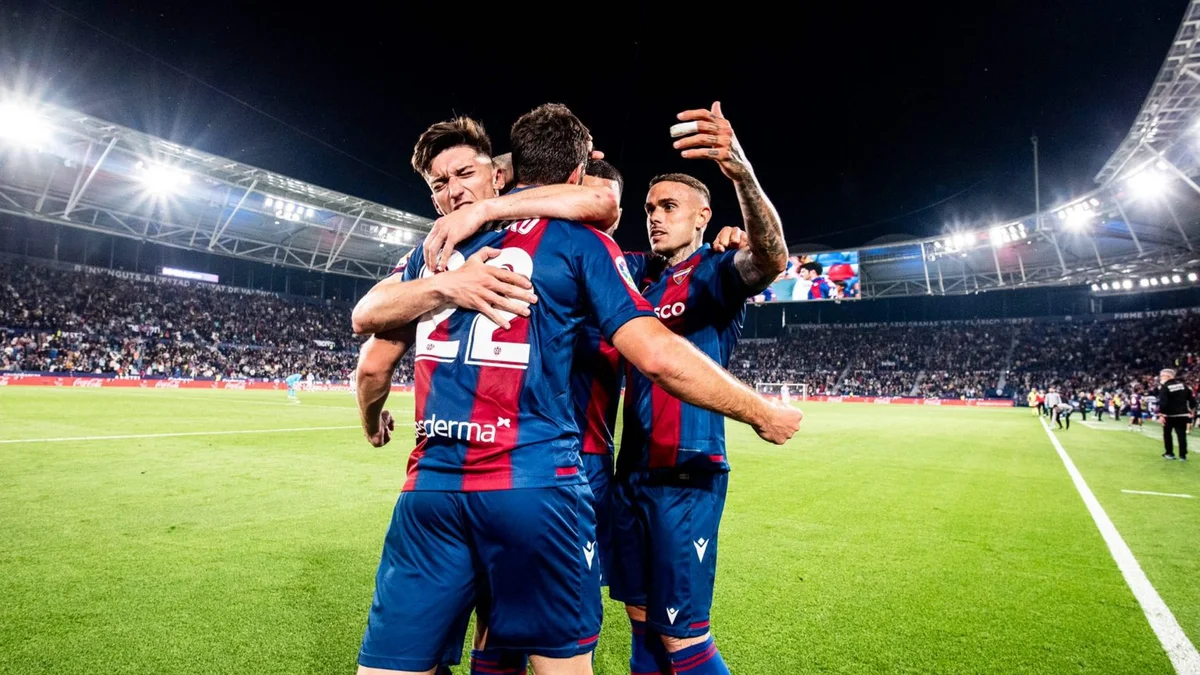
Levante matter because the club prove that Spanish football extends far beyond the giants. Valencia has two top-flight clubs, and the smaller one refuses to disappear. The derby against Valencia CF, known as the Derby del Turia, gives the city one of the fiercest local rivalries in Spain. Levante also matter because the club keep producing players who go on to shine on bigger stages, from Navas to Lerma, and because the fan base stays loyal through every relegation.
For neutral fans in Europe, Levante offer something rare in modern football. The club compete with a modest budget, trust in team spirit and play with an edge that makes every match unpredictable. A trip to the Ciutat de Valencia rarely produces a quiet afternoon.
Levante in 2026-27: How Is the Season Going Under Luis Castro?
Levante are playing their second consecutive season in La Liga, and the 118th season in the history of the club, with Luis Castro in charge for a second year. The target is the same as last season: survival. After eight matches, Levante sat seventeenth with seven points, from one win, four draws and three defeats, with 12 goals scored and 16 conceded. That leaves them in the final safe place, level on points with Elche below them and ahead only on goal difference, and they still hold a game in hand, the rearranged home match against Athletic Club on Wednesday 21 October 2026.
The results show a team that is hard to beat but wins too rarely. Levante lost 3-0 at Espanyol on the opening weekend, then took goalless draws away to Osasuna and Malaga. Their one league win so far was the biggest statement of the season, a 5-2 home victory over Real Betis at the end of August. A 3-3 draw at home to Sevilla and a 1-1 draw away at Deportivo La Coruna kept the points ticking over, but goals against remain the problem for a side playing at one of the smallest grounds in our guide to LaLiga stadiums, the 26,354-capacity Ciutat de Valencia.
Castro rebuilt the squad in the summer. Enzo Bardeli was the first signing, arriving on a free transfer from Dunkerque, and Aissa Mandi added experience in defence on a free transfer from Lille. Hugo Sotelo and Thiago Fernandez arrived on loan from Celta Vigo and Villarreal, defender Ifeanyi Ndukwe came on loan from Liverpool, and the club paid 3 million euros to sign forward Yanis Musuayi from Club NXT. Former captain Vicente Iborra now works as one of the assistant coaches of Castro, while the Copa del Rey offers a first-round tie to build momentum.
Levante Squad 2026-27: The Key Players to Know
Levante leaned on the loan market and free transfers to refresh the squad, mixing experienced internationals with the core that won promotion in 2025 and kept the club up last season. These are the players who matter most to the survival bid.
| Player | Position | Role in the team |
|---|---|---|
| Mathew Ryan | Goalkeeper | Australia international who brings top-level experience between the posts |
| Aissa Mandi | Defender | Algeria international signed on a free transfer from Lille to lead the back line |
| Adrian Dela | Defender | Vice-captain and a regular starter in the centre of defence |
| Enzo Bardeli | Midfielder | The first signing of the summer, a free transfer from Dunkerque |
| Hugo Sotelo | Midfielder | On loan from Celta Vigo and trusted with a starting role in midfield |
| Roger Brugue | Forward | Club captain, with three league goals in the early rounds and 11 goals in the 2024-25 promotion season |
| Ivan Romero | Forward | Three league goals in the early rounds of the season |
| Yanis Musuayi | Forward | Signed from Club NXT for 3 million euros to refresh the forward line |
| Karl Etta Eyong | Forward | Cameroon international who adds power to the front line |
The depth comes from the loan market. Petar Ratkov is borrowed from Lazio, Axel Tape from Bayer Leverkusen, Dani Requena and Thiago Fernandez from Villarreal, and Manu Sanchez and Hugo Sotelo from Celta Vigo, which gives Castro options without long-term spending. In goal, Pablo Cunat and Alex Primo back up Ryan, while Jorge Cabello, Victor Garcia and Jeremy Toljan add depth across the back four. Keeping that group fit will decide whether Levante stay above the line.
The Derbi del Turia: Levante vs Valencia Explained
The city derby between Levante and Valencia CF is known as the Derbi del Turia, after the river that runs through Valencia, and also as the Derbi Valenciano. The clubs first met in 1920, in the Regional Championship of Valencia, but they did not face each other in La Liga until Levante reached the top flight. That first league derby came on 28 September 1963 at Mestalla and finished 5-3 to Valencia, and Levante won the return match 1-0 at home in January 1964.
Valencia have dominated the fixture. From 40 official meetings, Valencia have won 23, Levante eight, and nine have been drawn. In La Liga alone, the clubs have met 34 times, with 17 wins for Valencia and eight for Levante. Levante have not won an official match at Mestalla since 1937, and the biggest margin in the derby is the 5-1 win of Valencia at Levante in May 2008. The best derby days of Levante have come at home, including the 4-2 win in June 2007, when Riga Mustapha scored twice, the 1-0 win in October 2012, and a 2-0 win in May 2014.
Valencia won both derbies in 2025-26, 1-0 at Mestalla in November 2025 and 2-0 at the Ciutat de Valencia in February 2026. With both clubs fighting near the bottom of the table this season, the 2026-27 derbies carry relegation pressure as well as local pride. Read our guide to Valencia, Mestalla and the history of the club for the other side of the rivalry.
Levante Records: Top Scorers, Milestones and Recent Finishes
The record books of Levante reflect a club that has spent most of its history outside the top flight, but they still hold moments any fan would treasure, from a wartime cup triumph recognised decades later to a night when they beat the champions in a nine-goal thriller.
Who is the all-time top scorer of Levante?
Jose Luis Morales is the record scorer of Levante in the top flight. El Comandante passed the mark held by Arouna Kone during the 2020-21 season, when he scored 13 league goals. Across two spells with the club, Morales made 377 competitive appearances and scored 83 goals, including 78 in league football. He finally left Levante in October 2026, joining Real Oviedo at the age of 39.
| Spell at Levante | League appearances | League goals |
|---|---|---|
| 2013 to 2022 | 294 | 66 |
| 2024 to 2026 | 62 | 12 |
What were the finishes of Levante in the last five seasons?
The last five seasons cover a full cycle of relegation, a lost play-off, a title and survival. The table below shows each league finish and the story that went with it.
| Season | Finish | Season highlight |
|---|---|---|
| 2021-22 | 19th in La Liga | Relegated, ending five straight seasons in the top flight |
| 2022-23 | 3rd in Segunda Division | Lost the promotion play-offs after finishing third |
| 2023-24 | 8th in Segunda Division | Finished outside the play-off places |
| 2024-25 | 1st in Segunda Division | Champions, promoted back to La Liga |
| 2025-26 | 16th in La Liga | Survival secured in the first season back |
Other milestones stand out. Levante won the Copa de la Espana Libre in 1937, a wartime tournament that the Spanish Football Federation voted to recognise as an official cup title in 2023. On 26 October 2011, a 3-2 win over Real Sociedad put Levante top of La Liga for the first time in their history. On 13 May 2018, they beat champions Barcelona 5-4 at home, with Emmanuel Boateng scoring a hat-trick, to end the hopes of Barcelona of an unbeaten league season. Even Johan Cruyff wore the shirt, playing half a season for Levante in 1981.
More nights live long in the memory. In their first top-flight season, 1963-64, Levante beat Barcelona 5-1 at home, a result that still ranks among the finest in the history of the club. At the other end of the scale, relegation in 2022 was confirmed by a 6-0 defeat at Real Madrid, which ended five straight seasons in La Liga. The good times returned on 13 June 2010, when a 3-1 home win over Castellon sealed the return to the top flight.
The honours list also runs deeper than the headline trophies. Levante have won the third-tier Segunda B five times, a joint record, and lifted regional titles in the early decades, winning the Campeonato de Valencia in 1927-28 and the Campeonato Levante-Sur in 1934-35.
Bunol: The Academy and Reserve Team Behind Levante
The future of Levante is built at Bunol. The reserve team of the club, Atletico Levante UD, plays at the Ciudad Deportiva de Bunol, the training base outside the city, in a ground that holds 3,000 spectators. The reserve side was founded in 1962 from a merger of CD Portuarios and UD Malvarrosa, played as Levante UD B between 1994 and 2014, and now competes in the Tercera Federacion, where it finished third in its group in 2025-26. At their best, the reserves have played in the third tier, spending 11 seasons in the old Segunda Division B.
The pathway works. Jose Luis Morales joined the reserve team in 2011 and graduated to become the record top-flight scorer of the club. Vicente Iborra, Ruben Garcia, Jason and goalkeeper Dani Cardenas also came through the reserve set-up, and Iborra is now on the first-team coaching staff. Young defender Marc Santos holds a first-team squad number while still listed with the reserves, which shows how closely the two squads are linked.
Morales is the clearest proof of what the pathway can produce. He did not make his La Liga debut until the age of 27, yet he finished as a club legend. In the 2024-25 promotion season, he played all 42 league matches and shared the top-scorer honour of the squad with Roger Brugue, each scoring 11 goals as Levante won the Segunda title.
Conclusion
Levante history is a story of survival, comebacks and one unforgettable European adventure. Founded in 1909, the oldest club in Valencia has won three Segunda titles, finished sixth in LaLiga and reached the Europa League knockout rounds. The 2026-27 season brings another survival fight, but Levante have spent more than a century proving that they belong in this fight.
When was Levante founded?
Levante was founded on 6 September 1909 as Levante Football Club, which makes it the oldest football club in the city of Valencia.
What stadium do Levante play in and what is the capacity?
Levante play at the Estadi Ciutat de Valencia, which opened in 1969 and has a capacity of 26,354 spectators.
Has Levante ever won LaLiga?
No, Levante have never won LaLiga. The best league finish in club history is sixth place in the 2011-12 season, which brought qualification for the UEFA Europa League.
Who are the most famous players in Levante history?
Jose Luis Morales, Keylor Navas, Jefferson Lerma and Arouna Kone rank among the most famous players in Levante history, with Navas going on to win three Champions League titles with Real Madrid after leaving Valencia.
Who is the all-time top scorer of Levante?
Jose Luis Morales is the record scorer of Levante in the top flight. El Comandante scored 83 goals in 377 competitive appearances across two spells with the club, before leaving for Real Oviedo in October 2026 at the age of 39.
What is the Derbi del Turia?
The Derbi del Turia, also known as the Derbi Valenciano, is the city derby between Levante and Valencia CF. The clubs first met in 1920, and Valencia lead the official head-to-head with 23 wins to the eight of Levante, with nine draws, from 40 meetings.


6 Comments