
LaLiga Stadiums: The Biggest and Most Famous Grounds
LaLiga stadiums are part of the show. A match in Spain is never just about the 22 players on the pitch. It is about the steep stands, the noise, the history in the walls and the architecture that shapes the atmosphere. From the giant bowl in Barcelona to the fortress in Bilbao, every ground has a character of its own.
This guide tours the biggest and most famous grounds in Spanish football. It covers the giants at the top of the capacity list, the historic arenas that have hosted World Cup matches and European finals, and the modern venues that set a new standard for matchday comfort.
Camp Nou: the giant that keeps growing

Camp Nou in Barcelona is the largest stadium in Spain and Europe. The ground opened on 24 September 1957 with a capacity for 99,053 people. Before the current renovation work, the listed capacity stood at 99,354. The ongoing project will turn Camp Nou into a covered stadium with state-of-the-art facilities for nearly 105,000 spectators.
The new roof uses one of the largest tensile structures in the world, with a surface area of 48,000 square metres. The design includes 18,000 square metres of photovoltaic panels and a rainwater collection system. Landscaped areas of up to 25 hectares will open the stadium to the surrounding neighbourhood.
Camp Nou has been the home of Barcelona since 1957. It hosted matches at the 1982 FIFA World Cup and the football final at the 1992 Summer Olympics. Generations of fans have filled the stands for El Clasico, European nights and title celebrations.
Santiago Bernabeu: the modern fortress

The Santiago Bernabeu in Madrid is the home of Real Madrid and one of the most famous stadiums in world football. The ground opened in December 1947 and now holds 83,186 people. A major renovation added a retractable roof, a 360-degree video board and a retractable pitch system that lets the stadium host concerts and other events without damaging the grass.
The Bernabeu has hosted the European Cup and Champions League finals, the 1982 FIFA World Cup final and countless El Clasico matches. The stadium took its current name in 1955 in honour of Santiago Bernabeu, the former player, coach and president who drove the project to build a new home for Real Madrid.
On matchdays, the stands rise steeply above the pitch, the noise builds fast, and the stadium has a long record of late comebacks and dramatic European nights.
Riyadh Air Metropolitano: the new standard
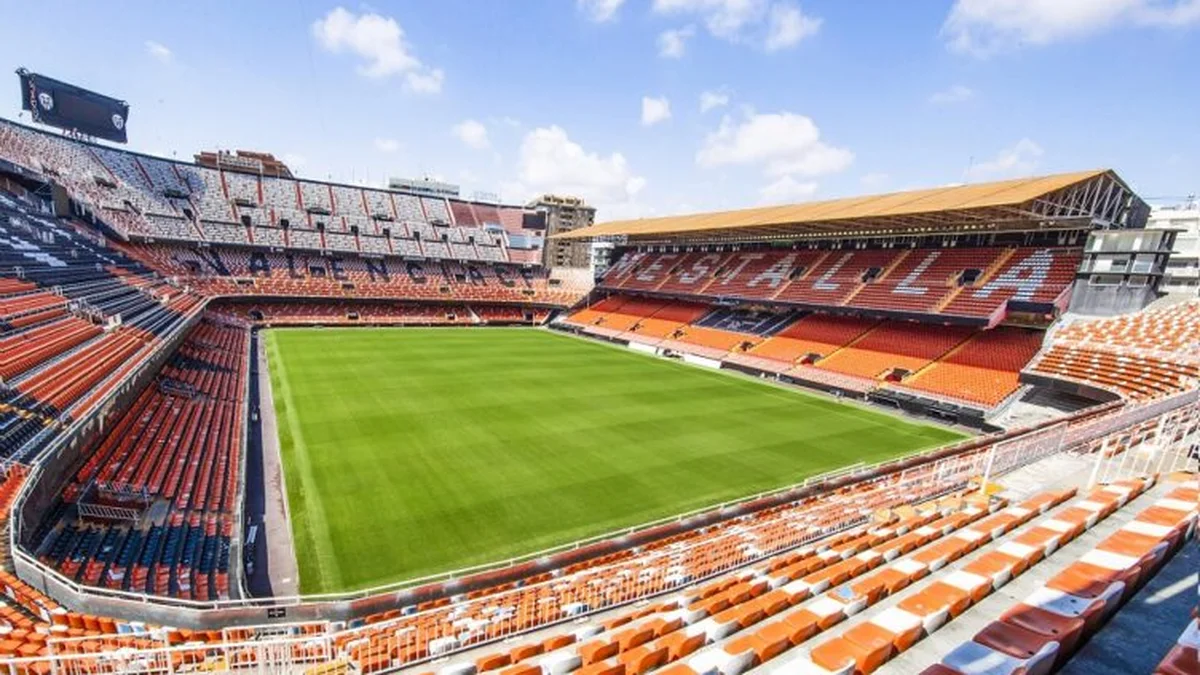
The Riyadh Air Metropolitano in Madrid is the home of Atletico Madrid and the newest of the three giants. The stadium reopened on 16 September 2017 after a full rebuild, and the listed capacity now stands at 70,692. The ground hosted the 2019 UEFA Champions League final between Liverpool and Tottenham Hotspur, and it will host the final again in 2027.
The Metropolitano replaced the old Vicente Calderon as the home of Atletico Madrid. The design keeps the stands close to the pitch, and the steep bowl traps the noise from the Atletico support. The roof carries LED lighting that turns the stadium into a landmark on night matches. The tour and museum at the ground have become major attractions for visiting fans.
The Metropolitano quickly became a fortress. Opponents face a wall of noise, a fast pitch and a team built for the big occasion.
Seville and the south
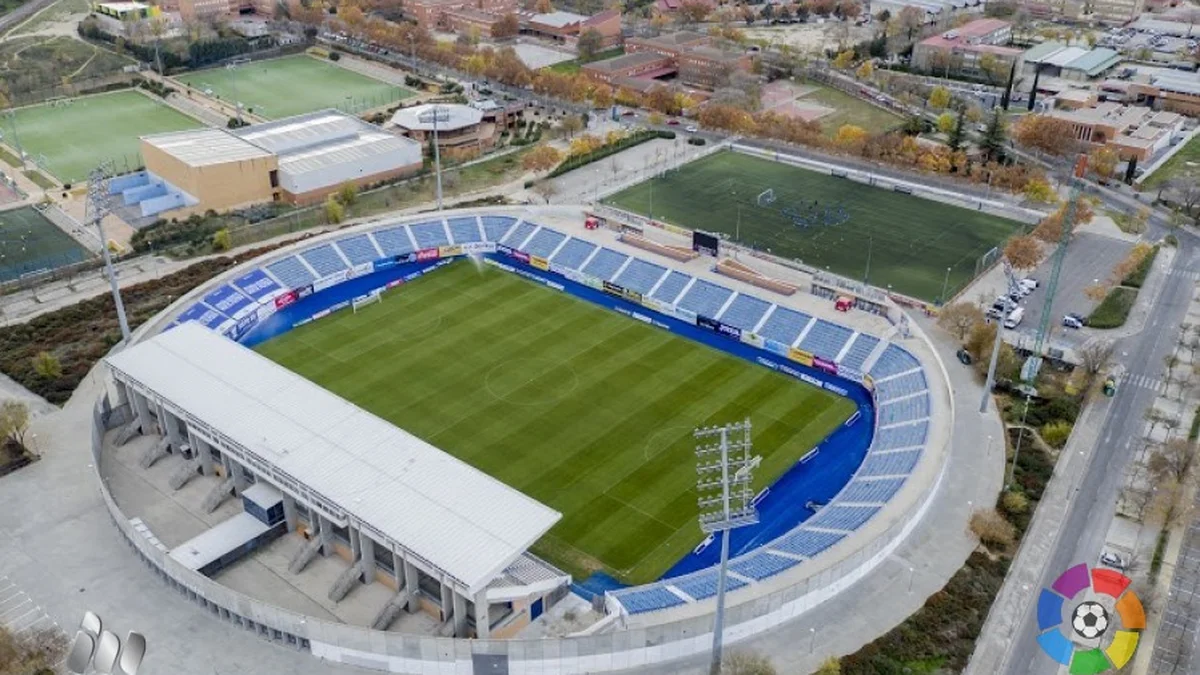
Seville hosts two of the most atmospheric grounds in Spain. The Estadio Benito Villamarin is the home of Real Betis. The stadium opened in 1929 and has a capacity of 60,721. The club lists the turf as natural grass, with pitch dimensions of 105 by 68 metres. The Villamarin has hosted World Cup matches and some of the loudest derbies in Spanish football.
Across the city, the Ramon Sanchez-Pizjuan is the home of Sevilla FC. The stadium holds 43,883 people and has a reputation for one of the most intense atmospheres in LaLiga. Sevilla fans fill the ground for European nights, and the stadium has hosted World Cup matches and a European Cup final.
Villamarin is bigger and more open. Sanchez-Pizjuan is tighter and louder. Both grounds put fans close to the action.
The north and the east

San Mames in Bilbao is known as the Cathedral of football. The current stadium opened in 2013 and holds 53,289 people. The ground replaced the original San Mames, which stood on the same site from 1913. The new stadium keeps the nickname and the atmosphere of the old ground, with a white exterior that glows at night.
Mestalla in Valencia is the oldest ground in LaLiga. The stadium opened on 20 May 1923 with room for 17,000 people. The current capacity stands at 49,430. Mestalla is famous for the steep north stand, which rises sharply above the pitch and creates an imposing wall of noise. The stadium hosted matches at the 1982 FIFA World Cup and the football tournament at the 1992 Summer Olympics.
Reale Arena in San Sebastian is the home of Real Sociedad. The stadium holds 39,313 people. The ground was rebuilt to remove the old athletics track and bring fans closer to the pitch. The change transformed the matchday experience. Real Sociedad fans now sit right above the action, and the stadium has become one of the most pleasant venues in the league for visiting supporters.
The biggest LaLiga grounds at a glance
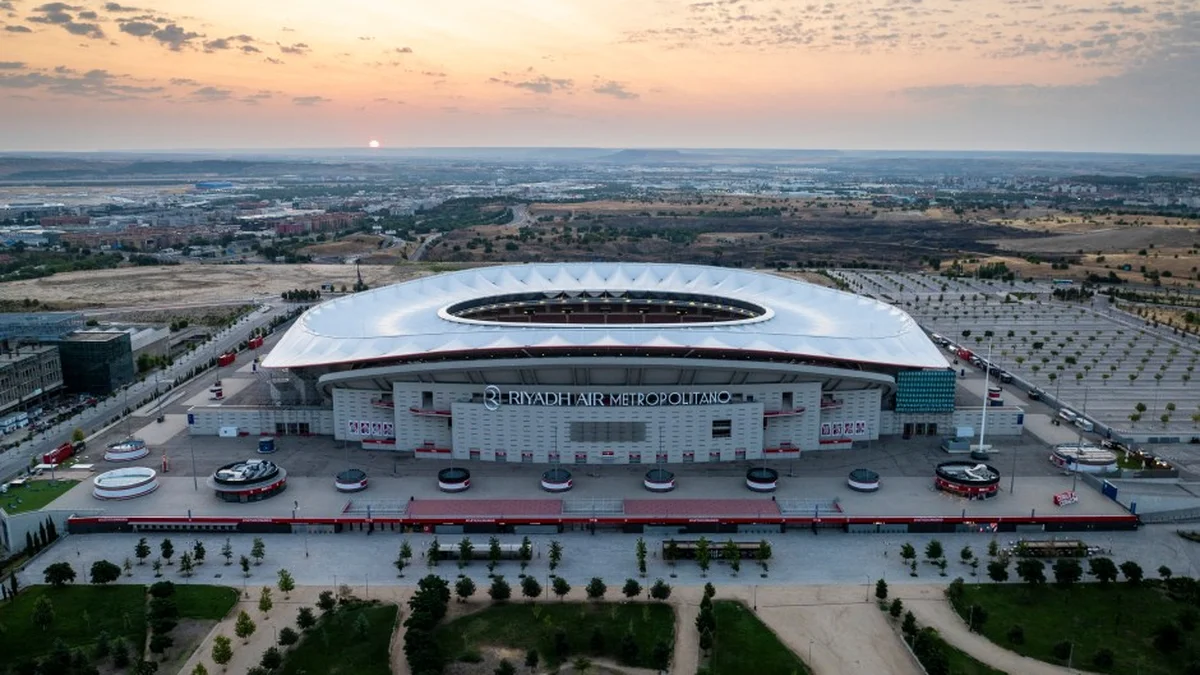
| Stadium | Club | City | Capacity | Opened |
|---|---|---|---|---|
| Spotify Camp Nou | Barcelona | Barcelona | Nearly 105,000 planned after renovation | 1957 |
| Santiago Bernabeu | Real Madrid | Madrid | 83,186 | 1947 |
| Riyadh Air Metropolitano | Atletico Madrid | Madrid | 70,692 | 2017 |
| Estadio Benito Villamarin | Real Betis | Seville | 60,721 | 1929 |
| San Mames | Athletic Club | Bilbao | 53,289 | 2013 |
| Mestalla | Valencia | Valencia | 49,430 | 1923 |
| Ramon Sanchez-Pizjuan | Sevilla FC | Seville | 43,883 | 1958 |
| Reale Arena | Real Sociedad | San Sebastian | 39,313 | 1993, rebuilt 2019 |
What makes a great LaLiga stadium

Size alone does not make a great stadium. Camp Nou wins on scale. The Bernabeu wins on history and technology. The Metropolitano wins on modern design. San Mames, Mestalla and Sanchez-Pizjuan win on atmosphere, because the stands sit close to the pitch and the noise stays inside the bowl.
The best grounds in Spain share three traits. The pitch sits close to the fans. The stands rise steeply, so the crowd feels on top of the game. The stadium carries a clear identity, whether it comes from a century of history or a bold new design. Those traits turn a football ground into a place that players remember and fans plan trips around.
For travelling supporters, the range of grounds is part of the appeal of LaLiga. Each stadium offers a different version of Spanish football culture.
All 20 LaLiga stadiums in 2026-27: the complete list
The table above picks out the eight biggest grounds in the league, but LaLiga in 2026-27 is played across 20 stadiums, from the rebuilt Camp Nou down to Vallecas in Madrid, which holds fewer than 15,000 fans. Three of the grounds are back in the top flight with the promoted clubs: La Rosaleda returns with Malaga, Abanca-Riazor returns with Deportivo La Coruna and El Sardinero returns with Racing Santander. The full list below gives every LaLiga stadium for the 2026-27 season, with its club, city and capacity.
| Stadium | Club | City | Capacity |
|---|---|---|---|
| Spotify Camp Nou | Barcelona | Barcelona | Nearly 105,000 planned after renovation |
| Santiago Bernabeu | Real Madrid | Madrid | 83,186 |
| Riyadh Air Metropolitano | Atletico Madrid | Madrid | 70,692 |
| Estadio La Cartuja | Real Betis | Seville | 70,000 |
| San Mames | Athletic Club | Bilbao | 53,289 |
| Mestalla | Valencia | Valencia | 49,430 |
| Ramon Sanchez-Pizjuan | Sevilla FC | Seville | 43,883 |
| Reale Arena | Real Sociedad | San Sebastian | 39,313 |
| RCDE Stadium | Espanyol | Cornella de Llobregat | 37,776 |
| Abanca-Riazor | Deportivo La Coruna | A Coruna | 32,660 |
| Estadio Martinez Valero | Elche | Elche | 31,388 |
| La Rosaleda | Malaga | Malaga | 30,044 |
| Ciutat de Valencia | Levante | Valencia | 26,354 |
| Abanca Balaidos | Celta Vigo | Vigo | 24,870 |
| El Sadar | Osasuna | Pamplona | 23,576 |
| Estadio de la Ceramica | Villarreal | Villarreal | 23,008 |
| El Sardinero | Racing Santander | Santander | 22,308 |
| Mendizorrotza | Alaves | Vitoria-Gasteiz | 19,840 |
| Coliseum | Getafe | Getafe | 16,500 |
| Estadio de Vallecas | Rayo Vallecano | Madrid | 14,708 |
Two clubs on the list are not playing in their traditional homes this season. Real Betis are based at La Cartuja, the 70,000-capacity Seville stadium built for the 1999 World Athletics Championships, while the Estadio Benito Villamarin is rebuilt. Rayo Vallecano started the campaign at Butarque, the home of Leganes, after the licence for Vallecas was suspended over safety concerns in August 2026. The phased return of Barcelona to Camp Nou also continues through the season: the club is playing in front of a reduced capacity of 62,652 while work on the upper tiers and the new roof continues towards the planned final figure of nearly 105,000.
Madrid is the only city with three LaLiga grounds this season: the Bernabeu, the Metropolitano and Vallecas. Seville and Valencia have two each. The pair of Valencia sit a short distance apart across the city: Mestalla, the oldest ground in the league, and the Ciutat de Valencia, home of Levante.
The spread of sizes shapes the league. The biggest ground will hold more than seven times as many fans as the smallest, yet the noise and the pressure on the pitch rarely follow the capacity list. That variety is exactly what makes a season of Spanish football so hard to predict, and it is what the rest of this guide explores.
Which LaLiga stadium has the best atmosphere? Three more grounds to know
The famous names at the top of this guide are not the whole story. Ask supporters around Spain which ground generates the most noise and three smaller stadiums come up again and again: El Sadar in Pamplona, the RCDE Stadium in Cornella and La Rosaleda in Malaga. None of them holds more than 38,000 people, but all three keep the fans close to the pitch and make life uncomfortable for visiting teams.
El Sadar: the wall of noise of Pamplona
El Sadar is the home of Osasuna and holds 23,576 supporters. The stadium wraps tightly around the pitch in Pamplona, and the home crowd is famous for backing the team for the full 90 minutes whatever the score. The identity of Osasuna is built on that loyalty: the club works with one of the smaller budgets in the league, but El Sadar gives it one of the strongest home advantages in LaLiga. Read more in our guide to Osasuna, El Sadar and the history of the club.
RCDE Stadium: the modern fortress of Espanyol
The RCDE Stadium in Cornella de Llobregat is the home of Espanyol and holds 37,776 fans. It is one of the most complete modern grounds in Spain, with steep stands that keep the noise in. On Derbi Barceloni nights against Barcelona, and on the big occasions when the team pushes for Europe, the atmosphere is far bigger than the capacity suggests. Our guide to Espanyol, the RCDE Stadium and the history of the club covers the ground and the club in full.
La Rosaleda: the returning stage of Malaga
La Rosaleda holds 30,044 supporters and is back in LaLiga for 2026-27 after Malaga won promotion through the play-offs. The ground sits close to the centre of Malaga and its stands rise steeply behind both goals. The return of top-flight football has brought the big crowds back, and a full La Rosaleda on a warm Andalusian night is one of the great sights of the Spanish season.
What the three grounds share is design. Covered stands, a steep bowl and no running track keep the sound close to the pitch, and all three sit in the middle of their communities rather than on the edge of the city. In LaLiga, atmosphere is rarely about size. It is about how close the fans are to the game.
LaLiga stadium tours and visiting fans: how to see the grounds up close
For many supporters, a stadium tour is the easiest way inside the great grounds of LaLiga. The Tour Bernabeu takes visitors behind the scenes at the redeveloped Santiago Bernabeu. Barcelona sell the Barca Immersive Tour and museum visit while the Camp Nou rebuild continues, and in Madrid the Atleti Tour & Museum combines a stadium tour of the Riyadh Air Metropolitano with the interactive museum of the club.
Visiting fans should always buy match tickets and tour tickets through the official club websites rather than resale sites, where prices rise quickly and tickets can turn out to be invalid. LaLiga grounds set aside a section for away supporters, and the biggest fixtures — El Clasico, the Madrid derby, the Seville derby and the Basque derby — sell out well in advance. Planning early matters more in Spain than in most leagues. If you can, pair the tour with a match: seeing a ground empty and then full, a day or two apart, shows how much the crowd changes it.
New LaLiga stadium projects: Nou Mestalla, the Villamarin rebuild and Camp Nou
The next great LaLiga stadium is rising in Valencia. Work on the Nou Mestalla resumed in January 2025 after the project had stood unfinished for years. The new stadium will hold 70,044 spectators, and Valencia CF are targeting a move in the summer of 2027, in time for the start of the 2027-28 season. Until then, the club keeps playing at the current Mestalla, the oldest ground in the league, which has been the home of Valencia since 1923.
In Seville, Real Betis are playing at La Cartuja on a provisional basis from the 2025-26 season while the Estadio Benito Villamarin is remodelled. The own stadium pages of the club list La Cartuja, a UEFA elite stadium with a capacity of 70,000, as the temporary home of the team, and the ground has also hosted the Copa del Rey final in recent seasons. The Villamarin works are expected to continue until 2028, so Betis fans face more time across the city before the club goes home.
The rebuild of Barcelona is the third major project reshaping the grounds of the league. The phased return to Camp Nou means the stadium currently operates at a reduced capacity of 62,652, with the finished ground planned to hold nearly 105,000 spectators under a new roof. When the work is complete, Camp Nou will remain the biggest football stadium in Europe — and the rest of LaLiga is racing to keep up.
LaLiga stadium records: European finals hosted by Spanish grounds
Four current LaLiga grounds have hosted the European Cup or Champions League final, and a fifth final is already booked in: the Metropolitano will host the final again in 2027. The Bernabeu leads the list with four finals, and it also staged the 1982 FIFA World Cup final, the biggest match Spanish football has hosted.
| Stadium | European Cup and Champions League finals | Years |
|---|---|---|
| Santiago Bernabeu | 4 | 1957, 1969, 1980, 2010 |
| Spotify Camp Nou | 2 | 1989, 1999 |
| Ramon Sanchez-Pizjuan | 1 | 1986 |
| Riyadh Air Metropolitano | 1 | 2019 (second final in 2027) |
The 1986 final at the Ramon Sanchez-Pizjuan remains one of the most famous nights on the list: Steaua Bucharest beat Barcelona on penalties after a goalless draw in Seville. The first final at the Metropolitano came in 2019, when Liverpool beat Tottenham, and the second final at the ground is scheduled for 2027. Add the World Cup matches of 1982, spread across grounds including Camp Nou, Mestalla and San Mames, and the stadiums of Spain have hosted almost every big occasion European football can offer.
Attendances underline the same contrast in 2026-27. The biggest crowd of the season so far gathered at the Santiago Bernabeu, where 74,799 supporters watched Real Madrid beat Malaga 4-0 on 26 August 2026. At the other end of the scale, the smallest attendance of the campaign was 3,742 for the 2-1 win of Rayo Vallecano over Espanyol on 15 September 2026, played at Butarque while Vallecas was out of use. Few leagues can swing between a near-sell-out at one of the biggest stadiums in Europe and a tight neighbourhood ground in the space of a few weeks, and that range is a big part of what makes the Spanish matchday special.
Conclusion
LaLiga stadiums range from the biggest ground in Europe to tight, historic arenas where the crowd feels part of the match. Camp Nou leads on capacity. The Bernabeu leads on prestige. The Metropolitano leads on modern design. The older grounds in Seville, Bilbao, Valencia and San Sebastian lead on atmosphere and character.
The league keeps investing in its stadiums. Camp Nou is being rebuilt. The Bernabeu has been transformed. New projects across Spain will raise the standard again. The grounds will change, but the core of the Spanish matchday will stay the same.
Frequently Asked Questions
What is the biggest stadium in LaLiga?
Camp Nou in Barcelona is the biggest stadium in LaLiga. The ground opened in 1957 with a capacity for 99,053 people, and the ongoing renovation will provide state-of-the-art facilities for nearly 105,000 spectators.
Which LaLiga stadium has the best atmosphere?
Many fans point to San Mames in Bilbao, Mestalla in Valencia and the Ramon Sanchez-Pizjuan in Seville for atmosphere. All three grounds keep the stands close to the pitch, which traps the noise and creates an intense matchday feeling.
Which LaLiga stadium is the oldest?
Mestalla in Valencia is the oldest ground in LaLiga. The stadium opened on 20 May 1923 with room for 17,000 people, and the current capacity stands at 49,430.
Which LaLiga stadiums have hosted a Champions League final?
The Santiago Bernabeu and the Riyadh Air Metropolitano have both hosted the Champions League final. The Metropolitano hosted the 2019 final and will host the final again in 2027.
How many stadiums are there in LaLiga in 2026-27?
There are 20 LaLiga stadiums in 2026-27, one home ground for each club. Real Betis play their home matches at the 70,000-capacity La Cartuja in Seville while the Estadio Benito Villamarin is rebuilt, and Rayo Vallecano started the season at the Butarque ground of Leganes after the licence for Vallecas was suspended over safety concerns.
Which is the smallest stadium in LaLiga?
Vallecas in Madrid is the smallest stadium in LaLiga in 2026-27, with a capacity of 14,708 for Rayo Vallecano home matches. The Coliseum, home of Getafe, is the next smallest at 16,500.




23 Comments